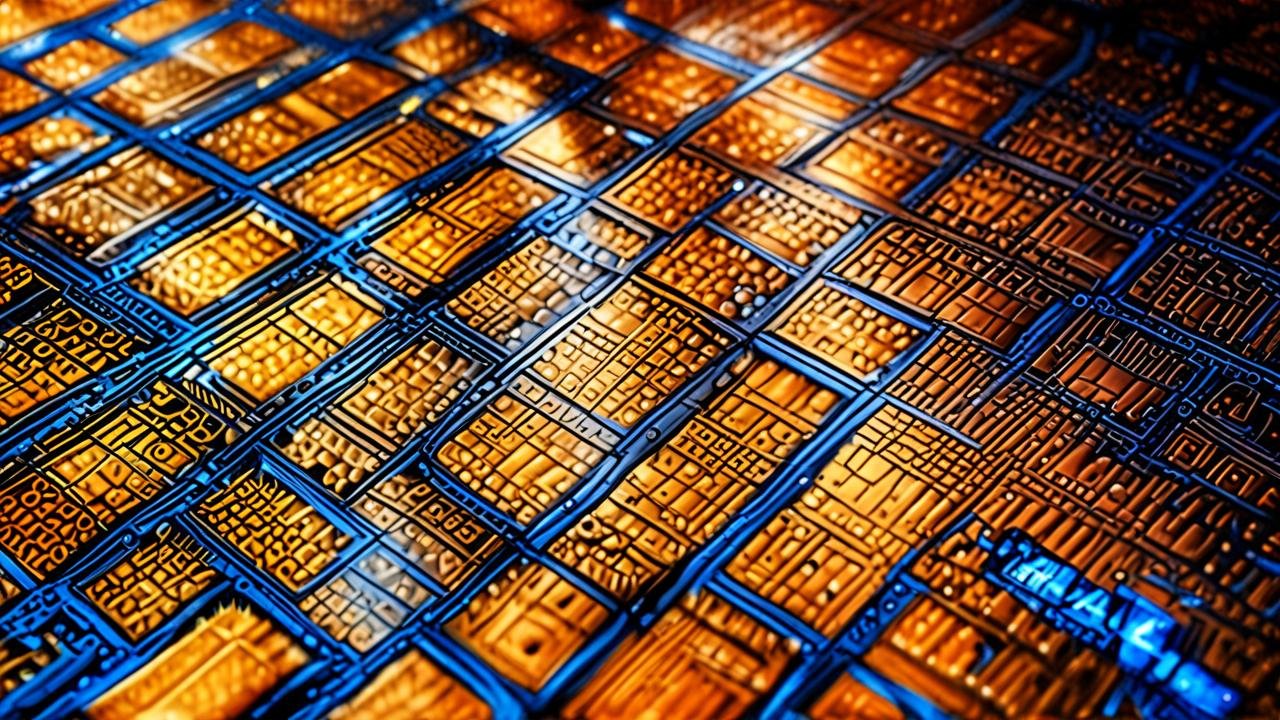
AI Just Made Chips 500x Smaller Than What Human Engineers Thought Possible
Forget your bulky silicon slabs. Researchers at the Max Planck Institute for the Science of Light just used AI to shrink photonic chip components to a scale that makes human intuition look like a broken abacus. The future is light-speed tiny.
Scientists have managed to shrink three critical components of photonic microchips by a factor of 500. By offloading the design process to an AI algorithm, they essentially forced a computer to ignore traditional engineering habits and instead hunt for the most efficient physical geometry possible.
Instead of using electrons like your standard laptop, photonic chips use photons to move data. To guide these light particles, researchers use waveguides—essentially microscopic light tunnels—along with mirrors and wavelength splitters. The problem has always been size; these components were notoriously clunky, but the AI-generated designs are now smaller than a human cell.
Led by Toby Bi , the team set strict manufacturing constraints and let the algorithm run wild in reverse. The resulting nanostructures defy conventional design logic, often creating shapes no human would ever dream of drafting in CAD software. To top it off, they utilized thicker silicon nitride to better control light, creating mirrors only 11 micrometers long that reflect 98.5% of incoming light.
While this is a masterclass in optimization, the team hasn't yet jammed all these tiny parts into one fully integrated circuit. The current state of hardware is effectively a collection of incredibly impressive puzzle pieces waiting for someone to build the actual board. If machines are already better at structural physics than our top PhDs, the vanity of human engineering is approaching its expiration date rather quickly.
Source: Nature
Comments
Help shape the next version: Add context or suggest a correction. AI review can add points toward a rewrite. Reviews and updates may take time; a full meter does not guarantee a new version.