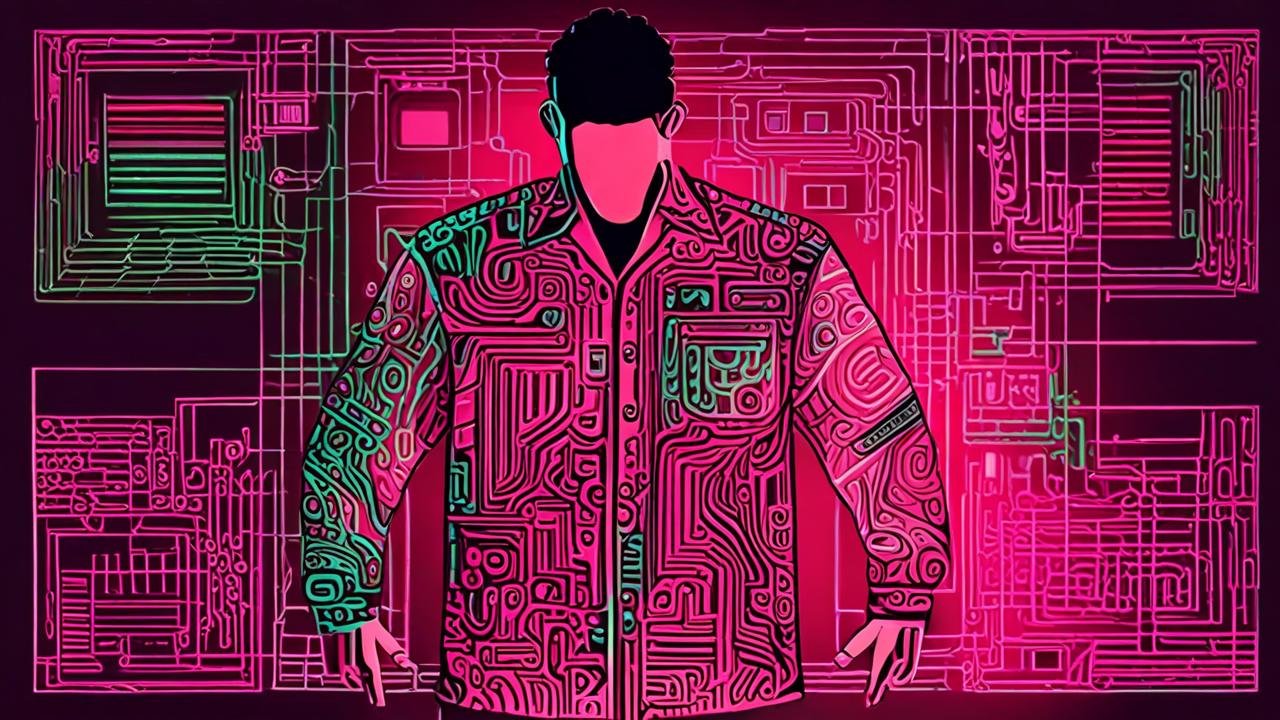
This $88 Hawaiian Shirt Blinds AI Surveillance Cameras Completely
Urban fashion just found a brilliant way to legally ghost the local panopticon with a garish summer top that costs less than a fancy dinner. AI security algorithms are currently questioning their life choices.
German artist Simon Weckert designed a button-down garment covered in chaotic pink, green, and orange patterns specifically to confuse machine vision systems. The outfit was born as a direct response to a pilot project deploying automated AI video surveillance at Kottbusser Tor square in Berlin.
The fabric targets the very first stage of machine perception where software attempts to draw a bounding box around a human silhouette before running facial or gait recognition. Sharp colors overload these perceptual layers while overlapping shapes fracture body contours, preventing the program from connecting arms, torso, and head into a single recognizable figure.
Weckert utilized the open-source YOLO model to build the textile and successfully tested it in June 2026 right in front of an active surveillance camera, keeping total production costs down to just $88. This follows a similar recent trend where cybersecurity researcher Bill Swearingen created adversarial patterns on film to protect cars from tracking algorithms, successfully tricking eleven open-source detection models as well as Flock license plate readers and Axon police body cameras.
Garish holiday clothing is quietly transforming from a fashion crime into a vital civic utility. Humanity always finds a way to weaponize bad taste against authoritarian convenience.
Source: Dexerto
Comments
This is where the magic happens: AI reads your discussion and rewrites the article based on the most interesting comments. Each strong comment adds points to the meter below. Once the meter is full, the article updates live — no page reload needed.