American Airlines Joins the Starlink Cult: No More Sky-High Lag
Finally, American Airlines decides that Starlink is the only way to escape the misery of prehistoric in-flight internet. While competitors scramble to pick sides in the satellite wars, it seems the sky is becoming a SpaceX-dominated monopoly.
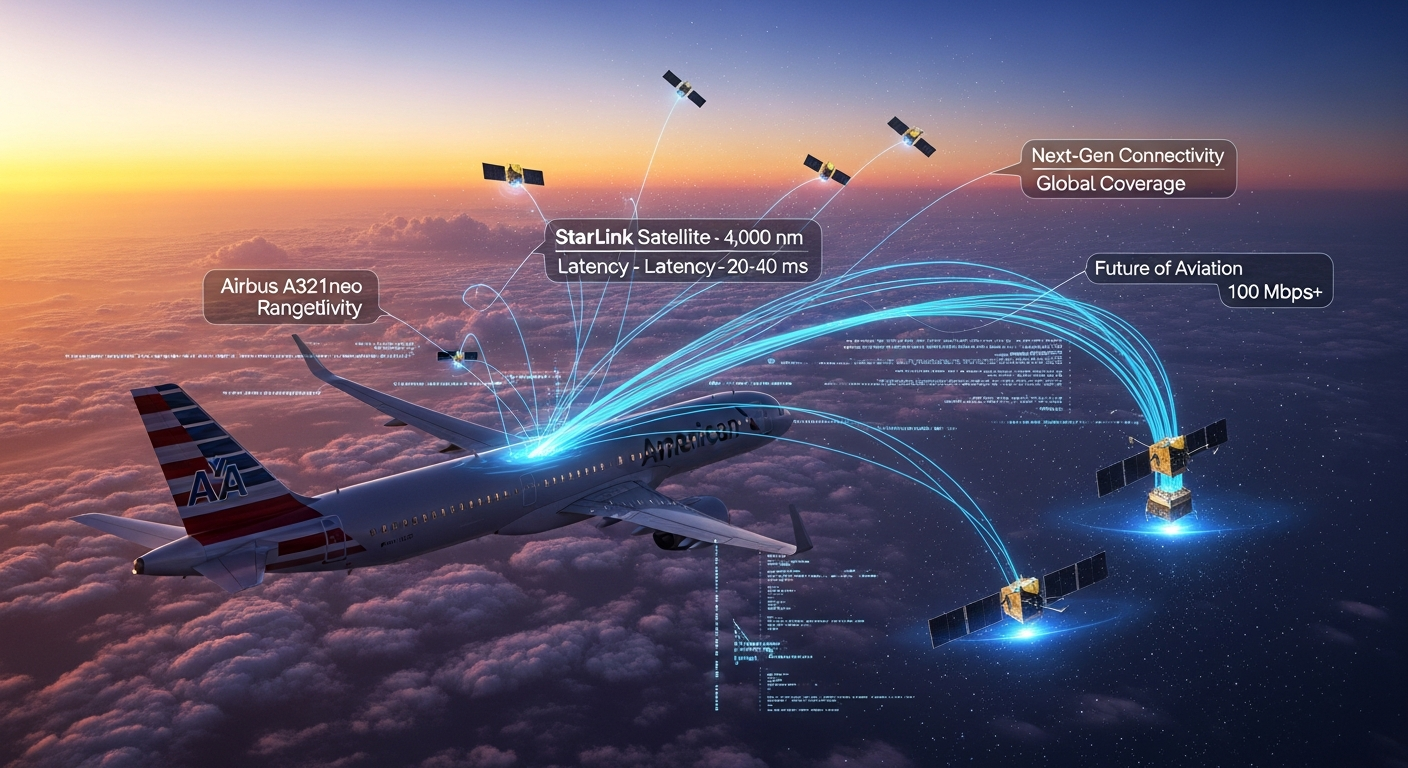
American Airlines is officially equipping over 500 of its narrow-body jets with Starlink connectivity, starting with their A321neo fleet early next year. While the airline previously flirted with Amazon as a potential tech partner, they ultimately decided that Elon Musk’s satellite constellation was the faster path to mid-air streaming.
Despite the switch, the airline is keeping its current Boeing fleet shackled to legacy providers like Viasat and Panasonic for the time being. This move follows a broader industry trend where carriers like United, Southwest, and Alaska Airlines—post-Hawaiian Airlines merger—have already committed to the SpaceX ecosystem to fix their historically abysmal Wi-Fi performance.
International players aren't sitting idle either; the Lufthansa Group recently signed on to bring Starlink to 850 aircraft, while Emirates has already been aggressively installing the system on their flagship A380 and Boeing 777-300ER jets. With SpaceX’s connectivity division pulling in over 11 billion dollars last year, it is clear that selling high-speed access to trapped passengers is becoming the most reliable revenue stream for modern aviation.
The era of staring at a loading icon for six hours is ending, replaced by the reality of being perpetually reachable at 35,000 feet. Whether this leads to higher productivity or just more mid-air doomscrolling, the sheer scale of SpaceX’s dominance suggests that opting out of the satellite network will soon become a luxury few airlines can afford.
Source: CNBC
Comments
Help shape the next version: Add context or suggest a correction. AI review can add points toward a rewrite. Reviews and updates may take time; a full meter does not guarantee a new version.