Anthropic Replaces Single AI with an Army of Agents to Review Code for $20
Instead of just asking one AI to double-check its own homework, Anthropic is deploying a whole digital committee in Claude Code to hunt down bugs—assuming developers are willing to pay for every single deep scan.
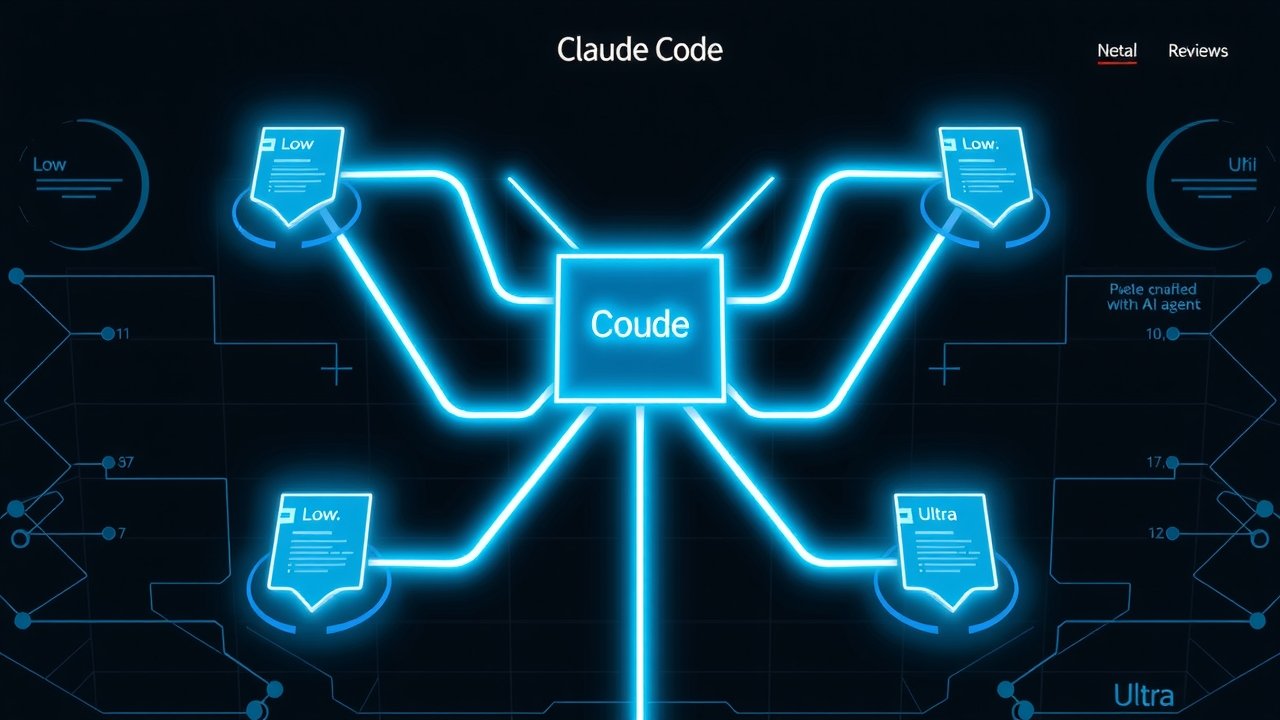
The updated code review architecture in Claude Code ditches the simple reasoning prompt in favor of five distinct analysis tiers ranging from quick local passes to full-blown cloud sandboxes. The system allows engineers to trigger modes manually or let the tool automatically adjust based on session context.
At the entry level, the Low tier performs a single fast pass over file diffs, catching roughly 17% of marked bugs in test benchmarks. Stepping up to Medium brings repository-wide context into play, running multiple search passes across the codebase to reach a 22% detection rate before bothering the human operator.
Things get genuinely weird at the High and X-high levels, where the architecture hands off error searching to independent sub-agents with clean contexts. Stripping away previous conversation history prevents the main model from blindly defending code it hallucinated five minutes earlier, pushing bug catches up to 25% while assessing fallout across external files.
The flagship Ultra mode takes the paranoia to cloud sandboxes, cloning the target GitHub Pull Request to deploy specialized testing bots that independently reproduce glitches. While Anthropic boasts that its internal dev team subjects every single pull request to Ultra before merging, external users on Pro or Max tiers get just three free runs before facing a bill of $5 to $20 per review.
Software development has officially evolved from arguing with stack overflow threads to paying a digital board of directors to debate a missing semicolon.
Source: Claude Docs
Comments
This is where the magic happens: AI reads your discussion and rewrites the article based on the most interesting comments. Each strong comment adds points to the meter below. Once the meter is full, the article updates live — no page reload needed.