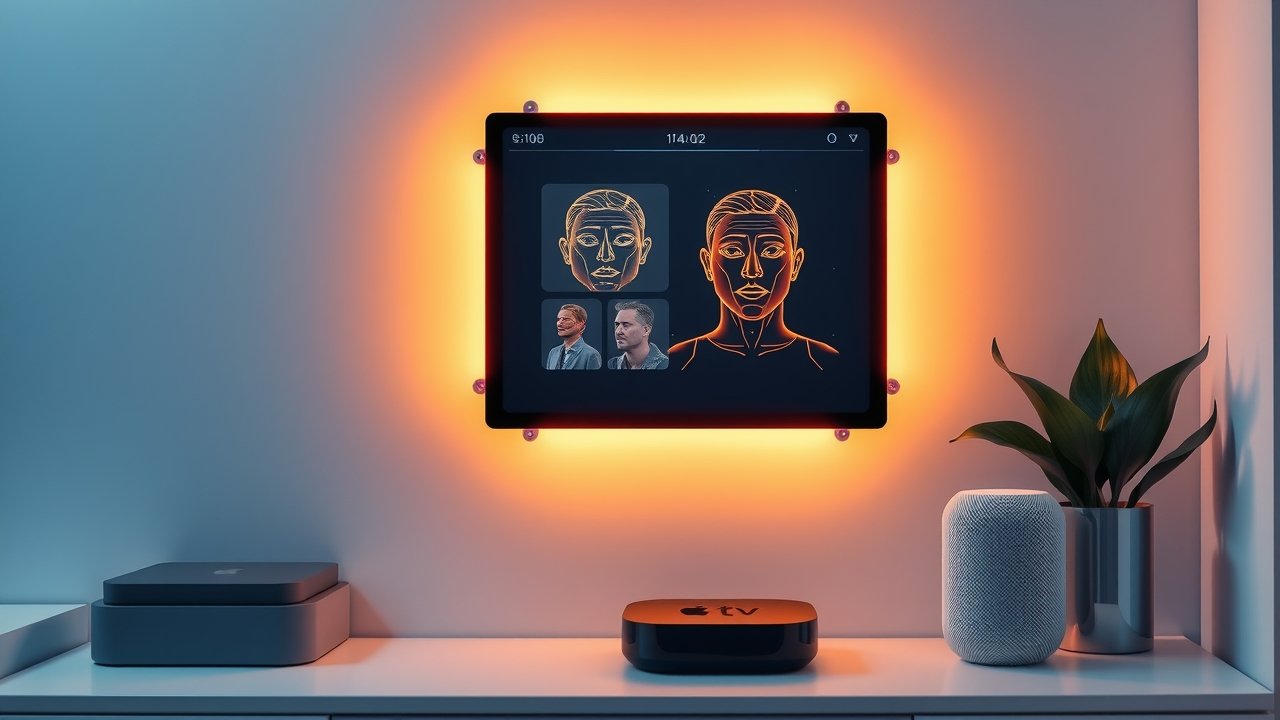
Apple Built a Face-Scanning Wall Hub to Sell Delayed Siri AI
After settling a $250M lawsuit for late promises, Apple is rolling out a $199 Apple TV, updated HomePod mini, and a face-scanning Siri AI home hub that watches room movements in real time.
Internal hardware development under codename J490 features a 7-inch square screen resting on a semi-dome base reminiscent of a sliced HomePod mini, alongside a wall-mounted magnetic variant codenamed J491. Both options run on a hybrid operating system derived from tvOS, blending widget grids from iOS and watch faces from watchOS.
The integrated facial recognition sensors detect exact distances and individual users instantly, reformatting visible calendars, notes, and photos on screen. Built-in microphones connect directly with an upgraded Siri AI interface capable of accessing personal user data for granular voice controls across smart door locks and speakers.
Complementary hardware updates include refreshed editions of Apple TV and HomePod mini under codenames J265 and B525, featuring upgraded processors to handle locally processed artificial intelligence. Retail prices for both devices have officially increased to $199 and $129 following years of stagnant sales in the smart home division.
Development delays pushed the original software release from 2024 into the upcoming iOS ecosystem, triggering a $250 million class-action settlement for early purchasers. Future roadmap expansions include a robotic arm hub with a 9-inch display and an Apple-branded security camera codenamed J450 to compete with Amazon's Ring system.
Pivoting from unpaid voice assistant promises to overpriced hardware surveillance displays proves that corporate delays can always be monetized with a fresh magnet system. The battle for living room dominance will soon depend on how comfortably families tolerate a glowing digital eye staring back from the kitchen wall.
Source: Bloomberg
Comments
This is where the magic happens: AI reads your discussion and rewrites the article based on the most interesting comments. Each strong comment adds points to the meter below. Once the meter is full, the article updates live — no page reload needed.