Box2D Creator Drops Box3D Because Unreal Engine Physics Are Garbage
The legend who gave us the physics behind Angry Birds just solved every modern game developer’s worst nightmare. Meet the open-source savior that might finally make virtual trees fall like real ones, despite Epic's multi-billion dollar engine failing at it.
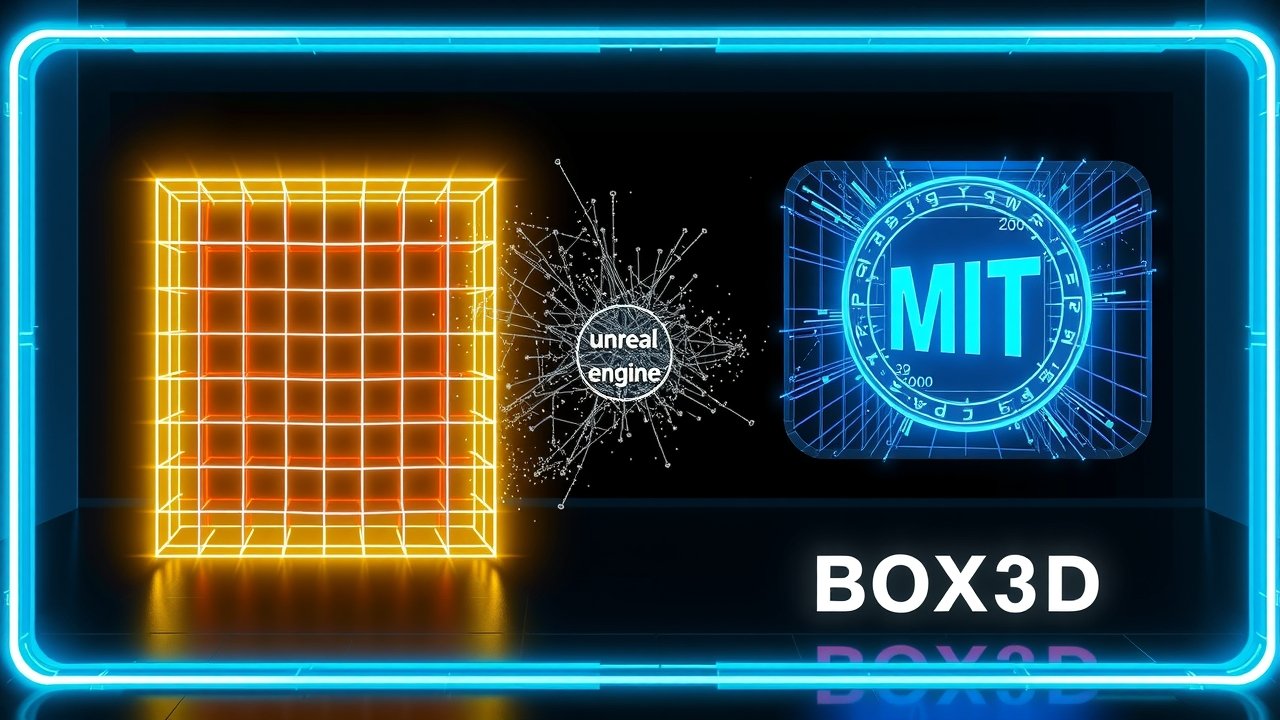
The developer Erin Catto has officially released the first alpha version of Box3D, a free, open-source 3D physics engine. Written in pure C and published under the permissive MIT license, this tool aims to rescue developers who are tired of struggling with broken virtual gravity.
The project was born out of sheer frustration during the development of a 3D shooter called The Legend of California by Kintsugiyama. While the studio utilized the powerhouse Unreal Engine, they quickly realized that its default physics engine, Chaos, was behaving more like a chaotic toddler. Thin objects spun in the air indefinitely as if ignoring the laws of friction, falling trees ignored voxel ground, and performance tanked whenever a few thousand objects cluttered the screen.
To fix this, the team originally planned to fork Jolt, but the creator of Rubikon—the physics engine that makes physical objects in Half-Life feel so incredibly satisfying—suggested a different route. They took a hobbyist, simplified version called Rubikon-Lite and stuffed it full of optimized, battle-tested algorithms from the legendary Box2D.
What remains of Rubikon-Lite is basically just the mathematical scaffolding for 3D collisions, while almost everything else was gutted and replaced with Box2D's robust DNA. Despite being in its infancy at version 0.1, the engine is already running under the hood of several projects, including the multiplayer sandbox s&box and a space MMO designed to handle a thousand players simultaneously.
The engine packs advanced features like continuous collision detection to prevent fast-moving bullets from phasing through solid walls. It also brings double-precision coordinate support, allowing developers to build massive cosmic worlds without physical calculations falling apart at the seams.
While massive tech corporations spend millions polishing bloated, over-marketed physics middleware, a single developer with some old Half-Life wisdom just built a superior alternative in his spare time. It seems the future of gaming physics belongs to clean, lightweight C-code rather than corporate monstrosities that can't even handle a falling pine tree.
Source: box2d.org
Comments
Help shape the next version: Add context or suggest a correction. AI review can add points toward a rewrite. Reviews and updates may take time; a full meter does not guarantee a new version.