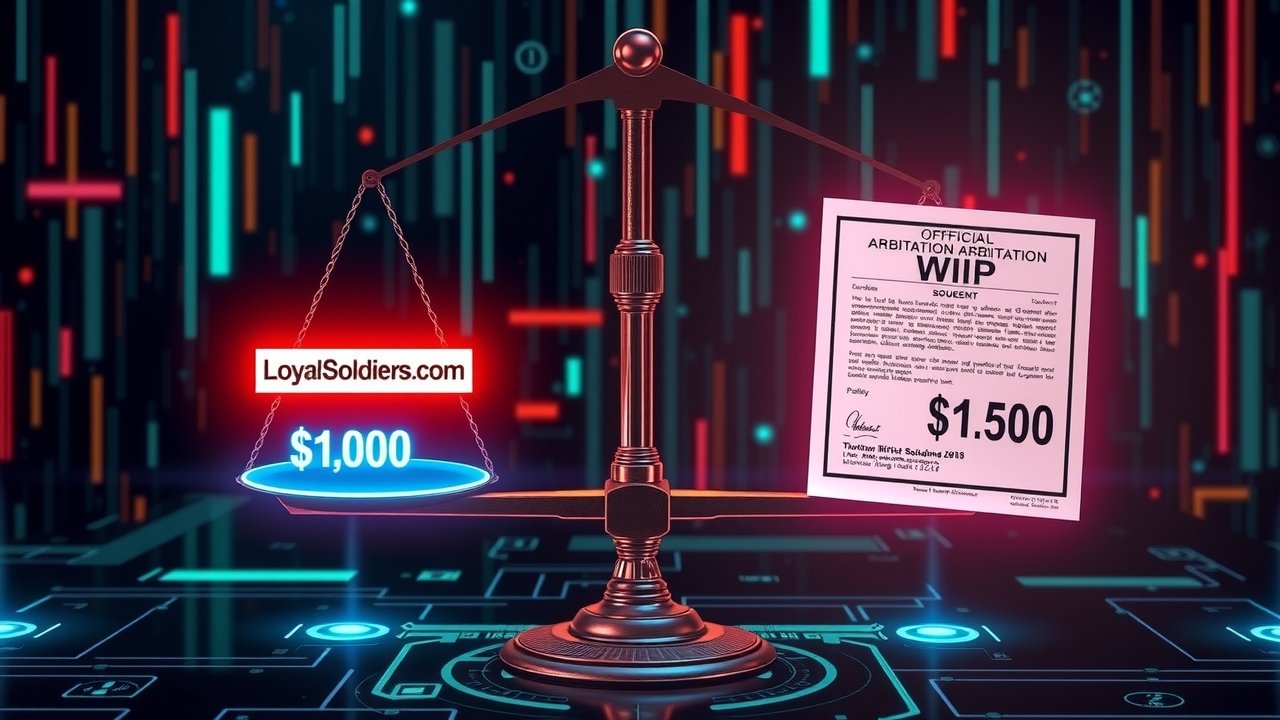
Buyer Refuses $1,000 Domain, Spends $1,500 To Lose It In An UDRP Case
When corporate penny-pinching goes entirely off the rails, businessmen end up learning intellectual property law the hard way. Trying to intimidate domain owners with legal threats is fun until the arbitrators hand out a humiliating reverse hijacking penalty.
British entrepreneur Callum Charnock runs an extreme sports equipment store under the brand LoyalSoldiers, operating on the local domain LoyalSoldiers.co.uk. Upon noticing the matching LoyalSoldiers.com, he sent an aggressive lowball offer of £100 ($135) to the owner, Hola Domains, backed by immediate threats of legal retribution.
The seller countered with a modest $1,000 price tag. Instead of cutting a straightforward deal, Charnock launched a formal dispute with WIPO under the UDRP framework, paying $1,500 just to initiate the proceeding.
The offensive collapsed rapidly once the arbitrator inspected the paperwork. It turned out that his referenced UK trademark had expired back in 2019 and did not even cover the exact wording claimed. To make things more awkward, the domain was originally registered in 2014 without ever targeting the businessman's enterprise.
The panel ruled that standard dictionary words do not grant automatic worldwide exclusivity. Filing the official dispute on the very same day as the cease-and-desist letter was deemed bad-faith intimidation, leading the panel to officially brand the complaint as Reverse Domain Name Hijacking.
Paying an extra surcharge to walk away empty-handed with an official record of frivolous bullying is a bold strategy in digital real estate. Corporate dominance plays tend to crumble fast when the arbitration fees dwarf the original asking price.
Source: Domain Name Wire
Comments
Help shape the next version: Add context or suggest a correction. AI review can add points toward a rewrite. Reviews and updates may take time; a full meter does not guarantee a new version.