Canva's $100M AI Experiment Crashes: Turns Out Humans Are The Real Glitch
Canva gave 5,000 employees a week off to play with AI, expecting a miracle. Instead, they hit a 'behavioral gap' because workers were too busy feeling guilty about answering emails. Turns out, shiny new tech can't fix old habits.
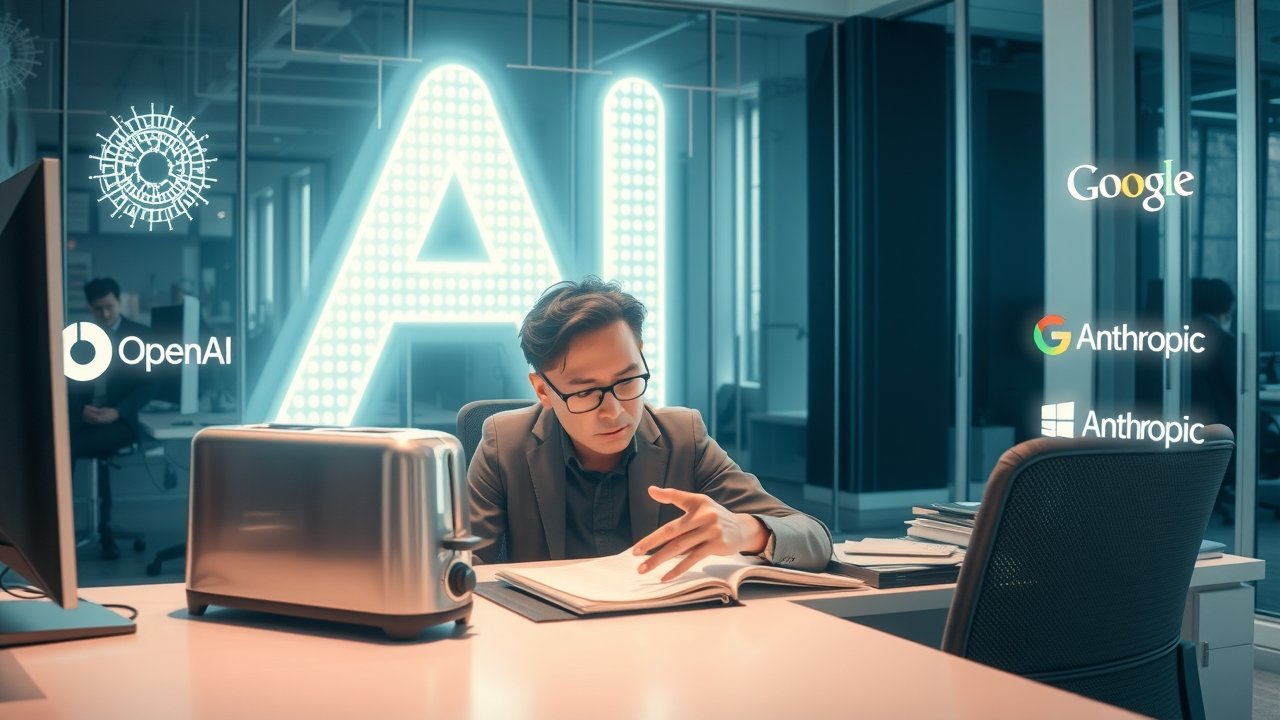
In an attempt to jumpstart innovation, Canva cleared the decks for 5,000 employees to spend a week exclusively playing with OpenAI, Google, and Anthropic tools. The project, dubbed AI Discovery Week, was meant to be a masterclass in corporate transformation. Instead, Rob Giglio, Canva's Chief Customer Officer, found that the biggest bottleneck wasn't a lack of computing power or subscription credits, but the crushing anxiety of staff trying to clear their regular inboxes while simultaneously pretending to be prompt-engineers.
Despite the initial friction, the experiment did produce some gems. One clever marketer built a system of seven autonomous AI agents that vacuumed up data from Slack and sales calls to automate ad generation, supposedly saving 60 workdays. Another team built an internal app to manage schedules for 20+ executives during Cannes Lions. In total, the company clocked 26,000 hours of AI tinkering, pushing internal usage of AI assistants to over 90%.
Rob Giglio now insists that the future of hiring isn't about asking if a candidate has used ChatGPT, but about finding managers who can redesign entire workflows. He argues that while Wix is busy firing 1,000 people due to 'AI evolution,' other companies are simply failing to realize they have a 'behavioral gap' rather than a 'technological' one. The transition to an AI-first company apparently requires more than just premium API keys; it requires the uncomfortable process of stopping people from doing tasks that don't actually matter anymore.
Source: Fortune
Comments
Help shape the next version: Add context or suggest a correction. AI review can add points toward a rewrite. Reviews and updates may take time; a full meter does not guarantee a new version.