China's AI GalaxyVS Screens Drug Candidates in Seconds on Tianhe
While western tech giants are busy teaching chatbots to generate weird images, Chinese researchers just dropped a platform that aims to completely break the pharmaceutical industry. If this isn't overhyped state propaganda, medicine is about to change forever.
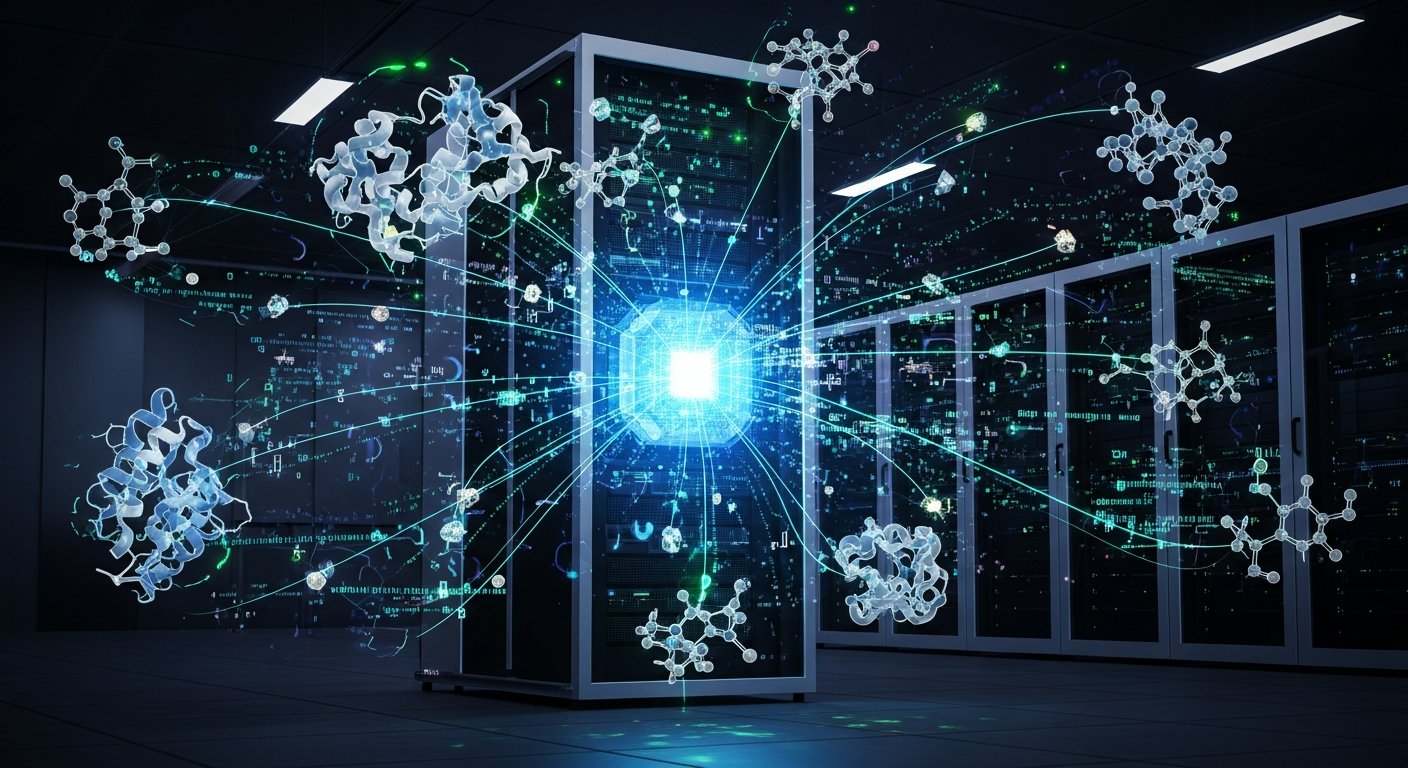
The national platform, named GalaxyVS, was jointly developed by the National Supercomputing Center in Tianjin and the applied AI division of Tsinghua University. The system utilizes a method called DrugCLIP, which bypasses classical molecular docking simulation entirely. Instead of calculating complex physical interactions between molecules, the AI converts proteins and candidate molecules into vectors in a shared mathematical space.
Calculating vector distances replaces centuries of physical simulations, allowing the system to determine compatibility almost instantly. During testing, the team processed ten trillion protein-molecule pairs in just 24 hours using only eight GPUs, a feat that would normally take a traditional supercomputer several generations to complete. This massive software pipeline has now been integrated directly into China's state-owned Tianhe supercomputer infrastructure, turning drug discovery into a rapid database query.
The system targets the 90% of druggable human proteins that currently lack known candidate molecules, specifically focusing on oncology, rare diseases, and rapid pandemic response.
Replacing physical chemistry with vector math is a brilliant hack, but the world is still waiting for independent verification of these jaw-dropping speeds. If the state-run media reports hold true, the global pharmaceutical giants might soon find themselves hopelessly obsolete compared to a government-run algorithm.
Source: South China Morning Post
Comments
Help shape the next version: Add context or suggest a correction. AI review can add points toward a rewrite. Reviews and updates may take time; a full meter does not guarantee a new version.