China Just Launched Its State-Owned Falcon 9 Clone to Orbit
Another day, another blatant CTRL+C from Beijing. While Elon Musk is busy tweeting, state-owned developers successfully launched their "totally original" reusable rocket to deploy a copycat Starlink constellation.
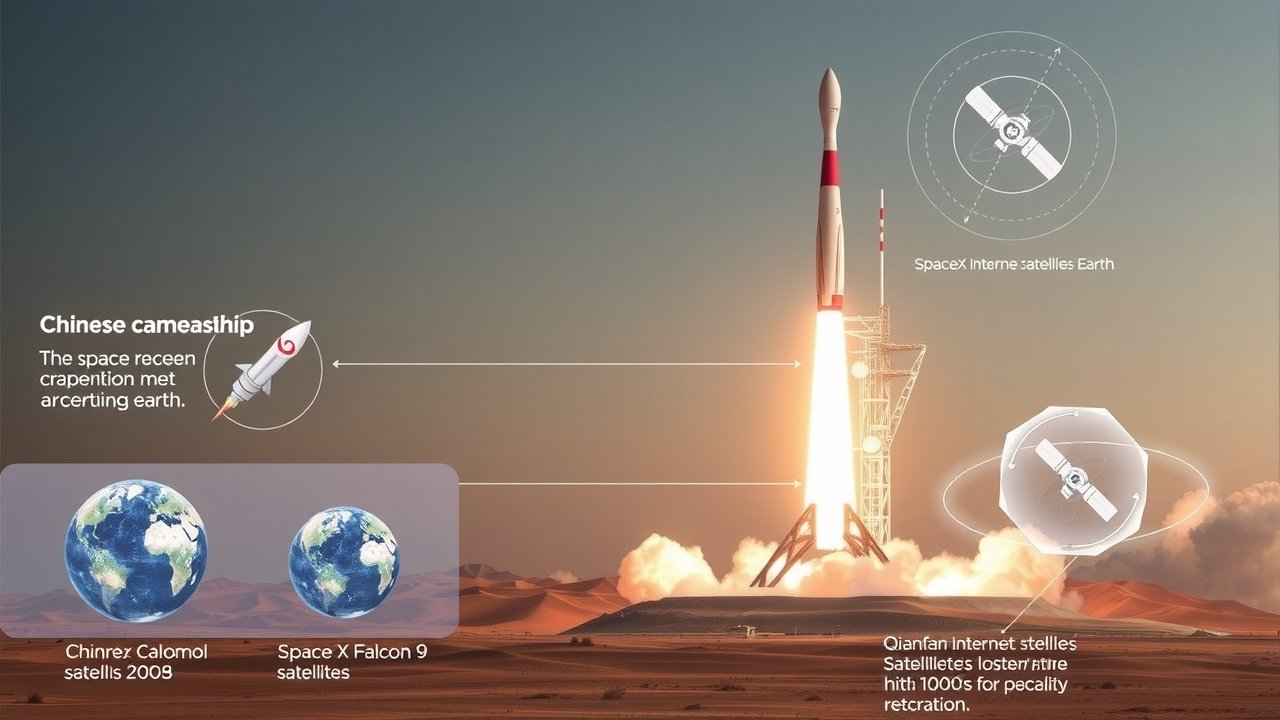
On June 1, 2026, the Long March 12B rocket roared to life from the Jiuquan Satellite Launch Center. This massive 570-ton beast didn't just carry cargo; it carried the hopes of the Chinese state to finally replicate SpaceX's homework. The rocket, towering at 72 meters with a wider 4.37-meter body, is specifically modified for reusability, packing nine kerosene-guzzling YF102R engines on its first stage.
While this maiden flight didn't end with a spectacular landing attempt, the hardware was fully dressed for the occasion. The rocket flew equipped with grid fins and landing legs, essentially acting as a dress rehearsal for future recovery missions where engineers will try not to set the booster on fire. In its reusable configuration, the launcher is designed to lift 12 tons to orbit, which is a significant drop from its 20-ton expendable limit but still plenty to get the job done.
For this debut, the payload wasn't some useless chunk of concrete. The rocket successfully deployed two satellites for the Qianfan constellation, a massive broadband project colloquially known as the Chinese Starlink.
Copying the industry leader is the ultimate form of flattery, especially when backed by national budgets. It seems the future of orbit belongs not to unique engineering marvels, but to whoever can mass-produce the same reliable booster design fastest.
Comments
Help shape the next version: Add context or suggest a correction. AI review can add points toward a rewrite. Reviews and updates may take time; a full meter does not guarantee a new version.