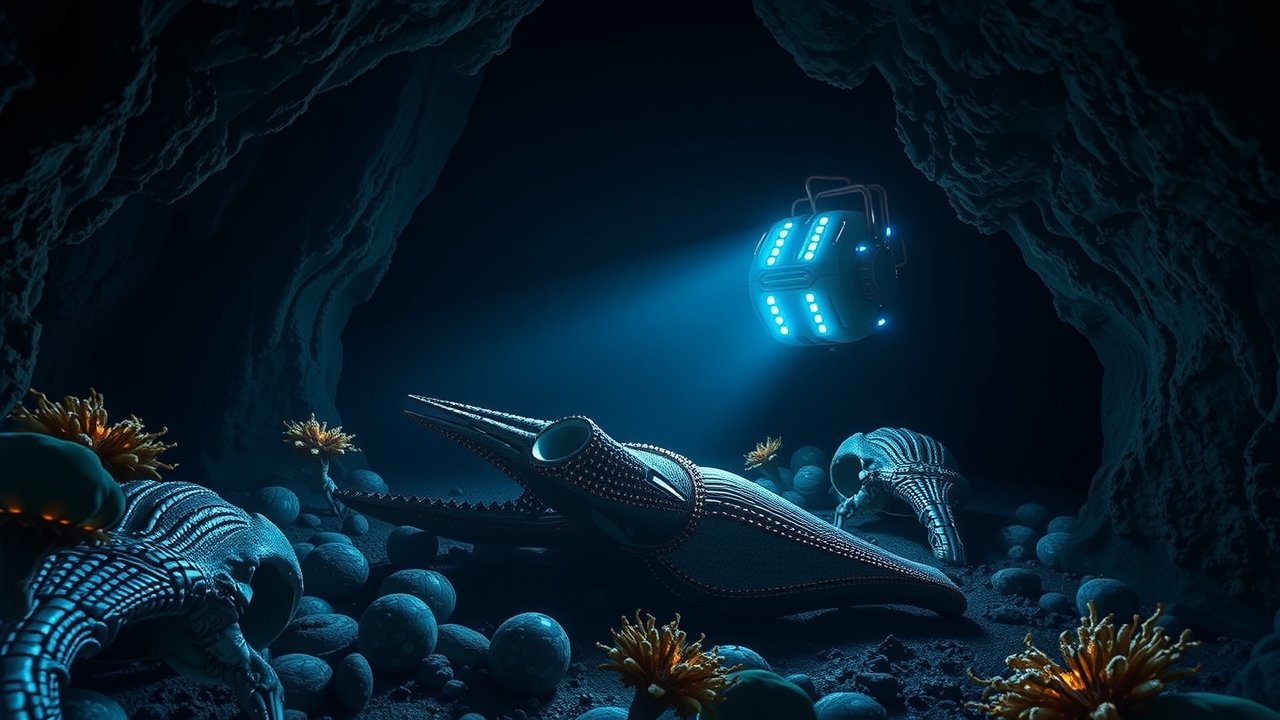
Scientists find a 1,200km underwater whale graveyard with 5-million-year-old skulls
Forget sci-fi ruins: researchers just stumbled upon a massive, pitch-black metropolis of the dead deep in the ocean, and it has been quietly growing since before humans even walked the Earth. Here is what is actually going on down there.
Deep-sea explorers navigating the icy, high-pressure abyss of the Diamantina Fracture Zone between Australia and Antarctica hit the ultimate scientific jackpot. Using the manned submersible Fendouzhe, researchers plunged into depths where the water pressure is enough to turn a human into a pancake, only to find a colossal, 1200-kilometer-long stretch littered with whale bones.
We are talking about nearly 500 individual whales resting in a neat, creepy line. While most things that sink into the deep ocean get absolutely vaporized by extreme conditions, these skulls survived. The secret is their dense structure and a heavy coating of iron and manganese, which essentially turned their heads into metallic rocks that refuse to rot.
Most of these ancient residents belong to the family of beaked whales, elusive deep-sea divers that look like dolphins on steroids. These creatures are famous for hunting giant squids at insane depths, but even their elite diving lungs have limits. Scientists suspect that hunting too deep caused decompression sickness or pure exhaustion, turning the V-shaped underwater canyon into a giant funnel that caught their sinking bodies over five million years.
Besides fossilized skulls, researchers found five active "whale falls"—fresh carcasses that serve as a literal, pop-up buffet for deep-sea creatures. Creepy bone-eating worms called Osedax, starfish, and sea anemones turn these dead bodies into bustling underwater cities.
Nature has been building its own goth museum of deep-sea tragedies for millions of years, and humanity just happened to stumble upon the entrance. It is a humbling reminder that the deep ocean does not care about our space travel ambitions; it has far weirder secrets decaying in its basement.
Source: Nature
Comments
This is where the magic happens: AI reads your discussion and rewrites the article based on the most interesting comments. Each strong comment adds points to the meter below. Once the meter is full, the article updates live — no page reload needed.