Dev spends $3k on Claude AI to port 1996 Quake into Roblox
Forget boring corporate AI tools writing email drafts. A rogue developer just dropped thousands of dollars on an LLM to build something beautiful: running a legendary 90s shooter inside a platform built for toddlers.
Developer Thomas Dimson took the entire C source code of the original 1996 Quake, including its multiplayer engine QuakeWorld and its custom scripting language QuakeC, and fed it to Claude Fable. The goal was to completely translate the ancient code into Luau, the programming language that powers Roblox. The AI essentially acted as a highly caffeinated, $3,000 translation machine, chewing through retro pointers and memory management concepts that would make modern web developers cry.
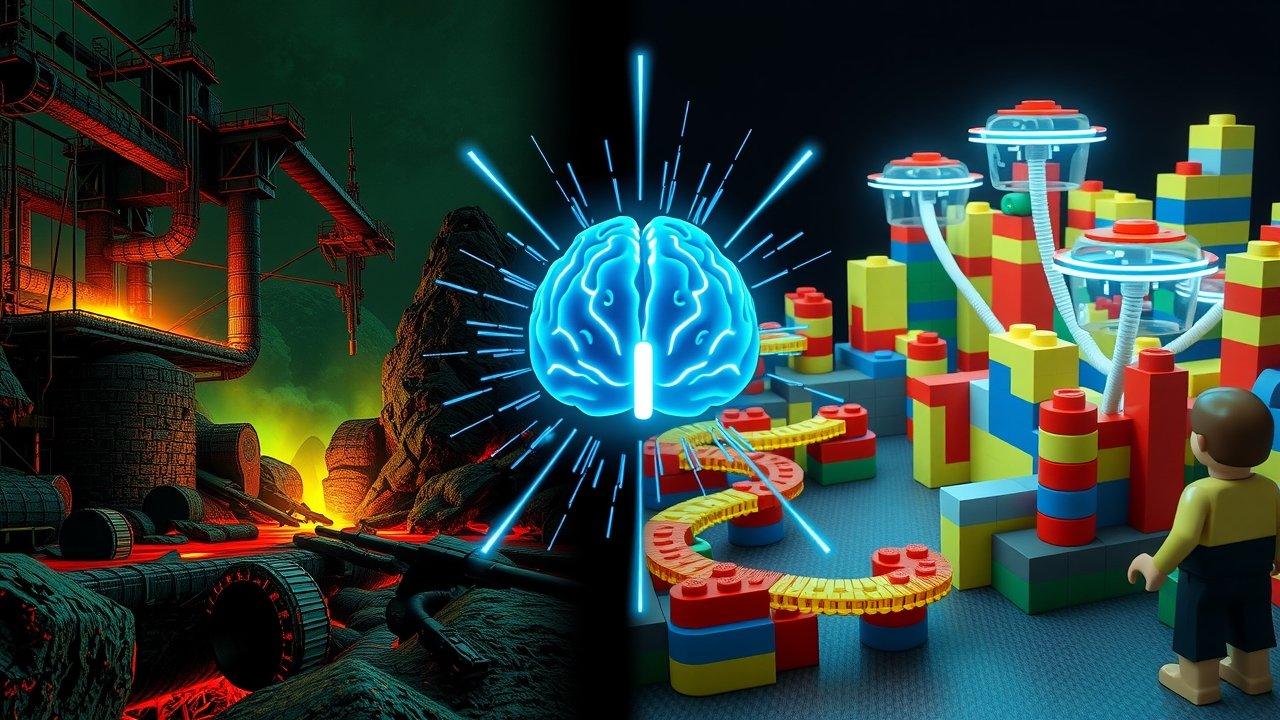
The resulting project, called RobloQuake, is fully open-source on GitHub under the GNU General Public License v2.0. Instead of using the game's original retro software rasterizer, this monstrosity utilizes Roblox's modern rendering system to draw the blocky 3D geometry and calculate nostalgic lightmaps. The standard UDP networking was also ripped out and replaced with native Roblox network events, meaning players are technically fragging each other on LEGO-themed servers.
To make it feel like a real modern game, the developer added a custom matchmaking lobby, touch screen controls for iPad kids, and voting systems. He even went as far as creating a censored rendering mode for children so nobody gets traumatized by pixelated gibs, turning the legendary bloodbath into a family-friendly playground where players look like classic blocky avatars. A playable demo called Frag Party is already live on Roblox, allowing players to jump in and play in real-time using open-source game assets.
Spending three grand on API tokens just to make 90s boomer-shooters accessible to nine-year-olds is peak chaotic good. It proves that while tech giants are trying to sell corporate productivity bots, true innovation lies in spending a small fortune to force incompatible eras of gaming history into a single, unholy alliance. The comment section will inevitably argue whether this is a brilliant technical achievement or a colossal waste of cloud computing power.
Source: GitHub
Comments
Help shape the next version: Add context or suggest a correction. AI review can add points toward a rewrite. Reviews and updates may take time; a full meter does not guarantee a new version.