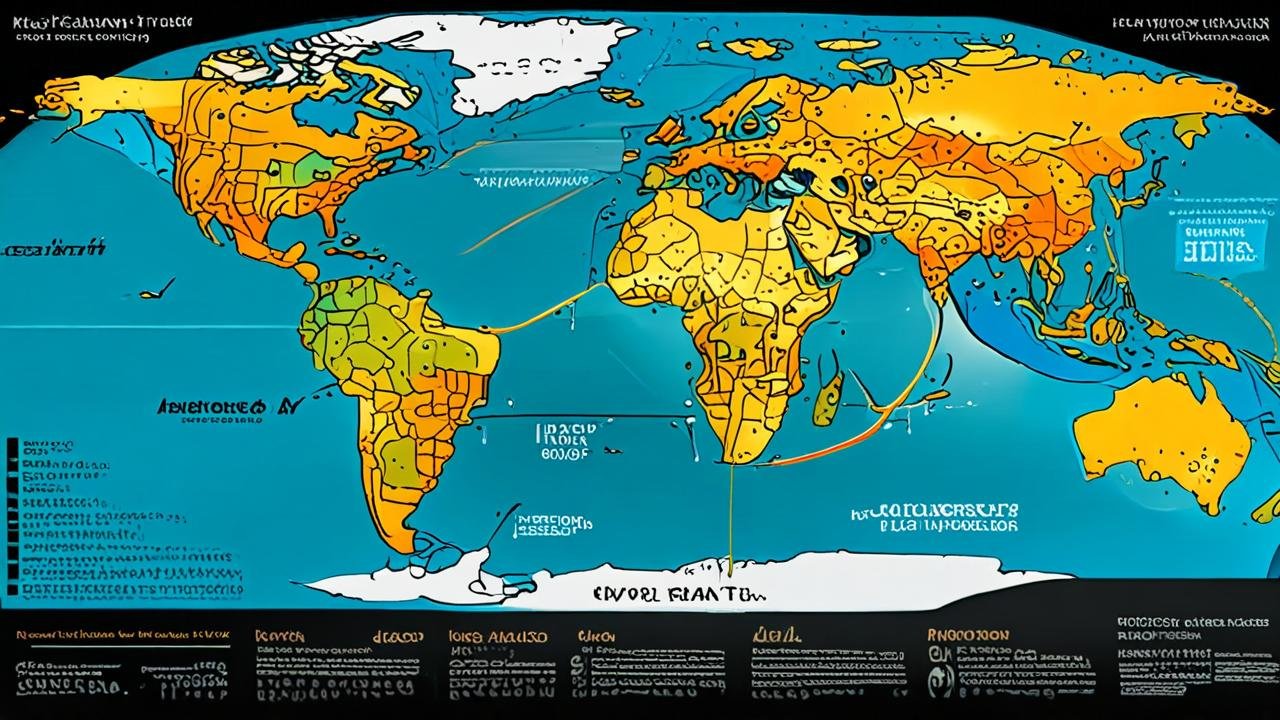
Google and NASA built an AI to spot invisible planetary gas leaks from space
While humans were busy arguing about carbon footprints, Google teamed up with NASA to turn the space station into a high-orbit snitch on invisible, climate-wrecking methane plumes.
The hardware doing the heavy lifting hangs on the robotic arm of the International Space Station. Named EMIT, it was originally lobbed into orbit just to map mineral dust in deserts across 285 spectral bands. It turns out scanning desert dirt produces enough hyper-detailed data to sniff out methane plumes, an atmospheric greenhouse villain roughly 30 times more potent than carbon dioxide over a century.
Sorting through messy satellite telemetry manually has always been a painful bottleneck for human scientists. To fix that, researchers fed 3.6 million physically simulated gas plumes into a new machine learning model dubbed MAPL-EMIT, training the system to filter through chaotic visual noise and landscape clutter.
The algorithm immediately outpaced manual human analysis, spotting 50% more gas clouds than expert eyes ever could. In the process, the neural network unearthed over 23,000 previously uncataloged plumes across the globe, instantly flagging 24 of the planet's 25 worst offending mega-landfills that had been venting quietly in plain sight.
Instead of locking the telemetry behind enterprise paywalls, the raw datasets have been thrown onto Google Earth Engine, alongside open-source detection models hosted on Kaggle and code repositories on GitHub.
Now that orbital algorithms can pinpoint exactly whose rogue pipe or trash pile is torching the atmosphere, the luxury of plausible deniability is officially dead. Big polluters can no longer pretend invisible leaks do not exist, leaving the internet to wonder how many more thousands of industrial gas vents are hiding right under everyone's noses.
Source: blog.google
Comments
This is where the magic happens: AI reads your discussion and rewrites the article based on the most interesting comments. Each strong comment adds points to the meter below. Once the meter is full, the article updates live — no page reload needed.