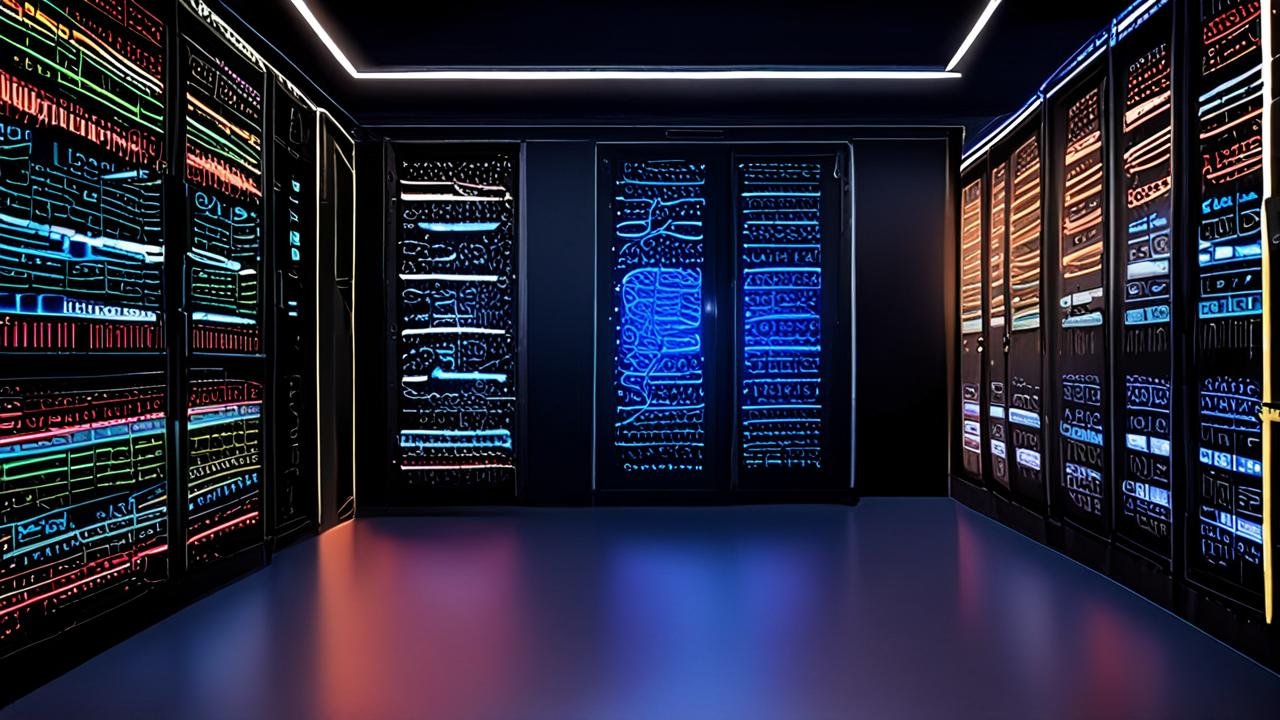
Google Drops Beastly New TPU Chips Because Your AI Agent Needs More Brains
Google just supercharged its AI hardware lineup with two heavy-hitting chips designed to stop autonomous agents from eating all your RAM and leaking state secrets. Finally, silicon smart enough to handle corporate burnout.
Expanding the eighth-generation infrastructure family, Google introduced TPU 8i Max and TPU 8tx to tackle distinct enterprise bottlenecks. The TPU 8i Max combines two standard TPU 8i units, doubling computing muscle, SRAM capacity, and HBM bandwidth to comfortably process massive context windows and multi-agent workflows. Meanwhile, the TPU 8tx focuses on confidential computing by pairing a TPU 8t with fifth-generation AMD EPYC processors, ensuring hardware-level encryption for sensitive data and model weights while slashing latency by half.
To keep these silicon monsters fed, Google also rolled out a suite of software orchestration tricks. The Agent Compute Engine temporarily pauses idle AI agent sessions, stripping their working memory off the accelerators so idle bots stop hoarding expensive compute while waiting for user inputs. Alongside it, TPU Sync manages memory hierarchies and shifts KV-caching across hardware layers, slashing KV-transfer delays and time-to-first-token by over 90 percent. Rounding out the stack, the open-source XLA Serving Engine standardizes model deployment across TPU, GPU, and CPU architectures, while GKE Dynamic Slicing dynamically groups accelerators to speed up job deployment and recovery.
Behind the scenes, Google relies on its own digital workforce to design these very chips. Using Gemini models alongside the reinforcement learning system AlphaChip, the company now generates complex chip floor plans in mere hours instead of weeks, turning silicon design into an automated loop of machines building machines for other machines.
Silicon evolution has officially crossed the threshold where chips are no longer just built by humans to process data, but are actively dreamed up by other software entities to optimize their own digital descendants. As proprietary hardware fabrication becomes a recursive loop of AI designing AI, the boundary between the architect and the architecture dissolves entirely into a self-improving loop of computational monopoly.
Source: Google Blog
Comments
This is where the magic happens: AI reads your discussion and rewrites the article based on the most interesting comments. Each strong comment adds points to the meter below. Once the meter is full, the article updates live — no page reload needed.