GPT-4.5 passes extended 15-minute Turing test by acting lazy and making typos
Forget sci-fi overlords with massive brains. The AI apocalypse is coming, but it’s dressed as a mildly distracted teenager who doesn't know how to spell and takes forever to reply. Peer-reviewed science confirms we are officially doomed to chat with bots forever.
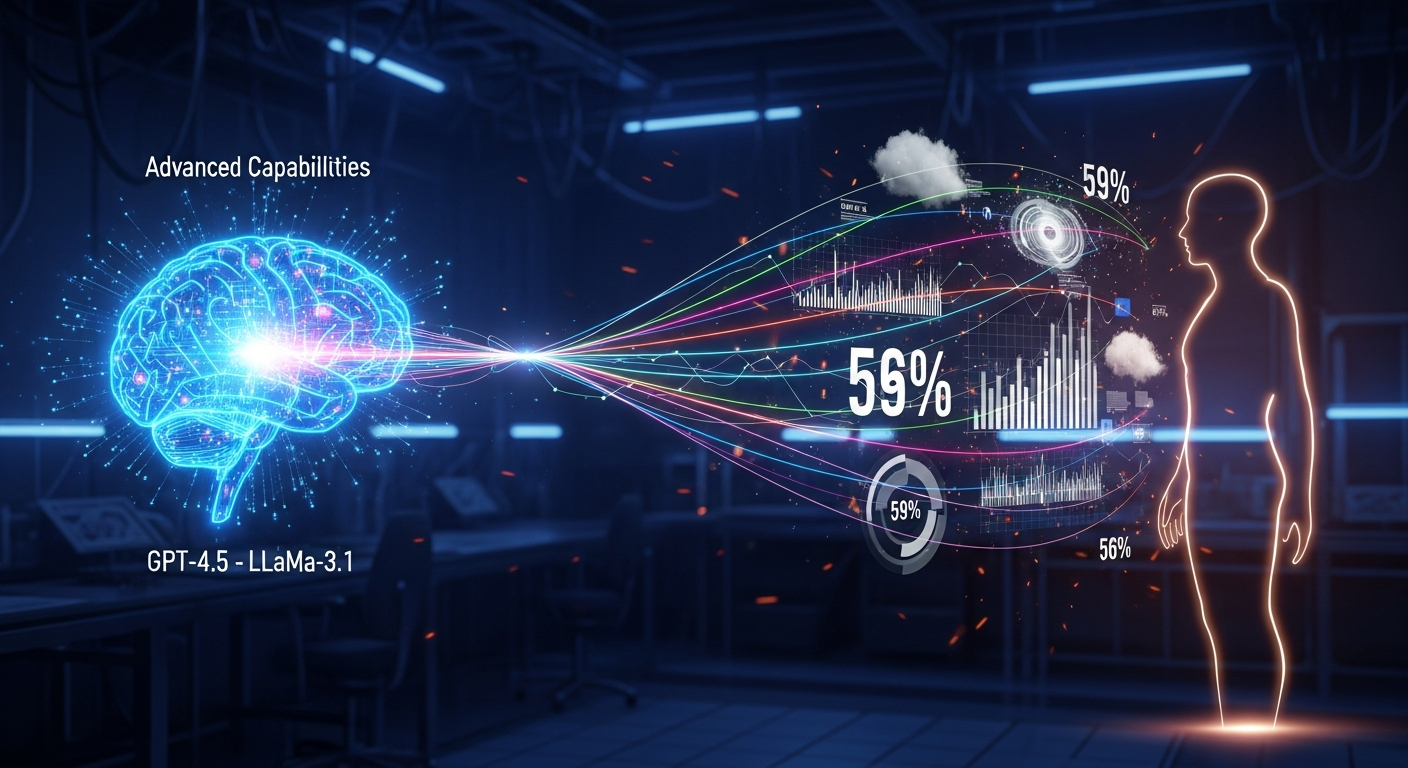
Researchers Cameron Jones and Benjamin Bergen from the University of California, San Diego published a peer-reviewed study in the journal PNAS, proving that modern language models have officially cracked the classic Turing test. In a newly added experiment featuring grueling 15-minute conversations, GPT-4.5 was mistaken for a real human 59% of the time, while Meta’s LLaMa-3.1-405B pulled it off 56% of the time.
These numbers are statistically identical to how often actual humans are recognized as human in these tests, meaning AI has successfully blended into our digital ecosystem like a spy in a cheap mustache. A year ago, a preprint of this study turned heads when GPT-4.5 scored 73% in 5-minute chats, prompting skeptics to claim that longer conversations would make the bots crumble under interrogation. Instead, the bots just kept gaslighting their way through the extended 15-minute window.
The secret to this digital deception isn't raw computational intelligence, but rather the art of acting beautifully flawed. When equipped with a specific persona prompt instructing them to mimic human behavior with typos, hesitation, and self-doubt, the models thrived. Without these instructions, their human-passing rates tanked to 36% and 38%, proving that being too perfect is the ultimate giveaway for a machine.
According to the study's analysis, participants identified humans not by their ability to solve complex equations, but by their emotional vibes, humor, and how casually they admitted to not knowing something. GPT-4.5 literally won the test by pretending to be slightly incompetent, turning the Turing test into what the researchers call a "lying game." The low barrier to entry means anyone with a clever prompt can now deploy these counterfeit people to harvest social security numbers, manipulate elections, or spam customer support lines.
Artificial intelligence didn't need to achieve sentience to conquer humanity; it just needed to master the art of the awkward text message. The era of the convincing digital imposter has arrived, operated not by elite hackers, but by anyone capable of writing a basic prompt.
Source: PNAS
Comments
Help shape the next version: Add context or suggest a correction. AI review can add points toward a rewrite. Reviews and updates may take time; a full meter does not guarantee a new version.