Huawei Claims It Can Build 1.4nm Chips Without Actually Making Them
When the US blocks you from buying the cool kids' toys, you just invent your own physics. Huawei is dodging sanctions with a classic 'it’s not what you have, it’s how you use it' move. Say hello to the era of architectural gymnastics.
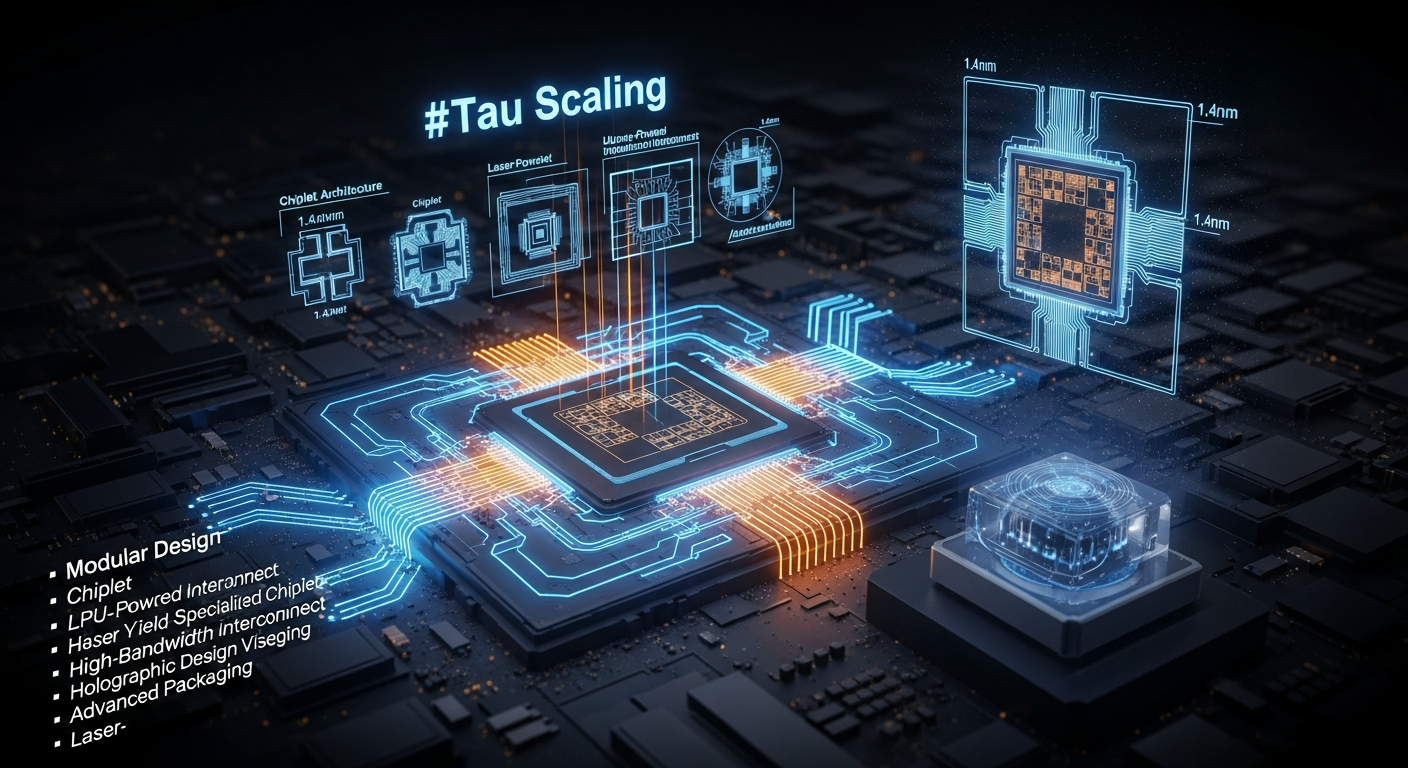
Huawei launched a concept called the "Tau Scaling Law" to stop chasing Moore's Law and focus on system-level optimization, advanced packaging, and chiplets. It’s the hardware equivalent of reorganizing your messy studio apartment so it feels like a duplex, instead of actually buying a bigger house.
The grand plan is to design chips that match the transistor density of a 1.4-nanometer node by 2031, without actually needing the ultra-expensive lithography machines that the US banned them from buying. Currently, China's domestic manufacturing is stuck around the 7-nanometer mark, making this architectural leap a massive geopolitical gamble.
To prove this isn't just a slide deck, Huawei is introducing a new architecture called LogicFolding in its Kirin mobile processors this year. They also claim to have secretly designed and shipped 381 chips using these system-level principles over the last six years, keeping the strategy under wraps until now.
The ultimate prize is the Ascend AI processor line, which has already forced Nvidia boss Jensen Huang to admit he’s losing the Chinese market. However, sceptics point out that this clever workaround faces massive brick walls in power consumption, heat dissipation, and the sheer cost of packaging.
Trying to outsmart physics with clever wiring is a bold strategy when your competition is printing actual microscopic transistors. If this architectural wizardry fails to cool down cloud data centers, China's AI dream might just end up as a very expensive space heater.
Source: Reuters
Comments
Help shape the next version: Add context or suggest a correction. AI review can add points toward a rewrite. Reviews and updates may take time; a full meter does not guarantee a new version.