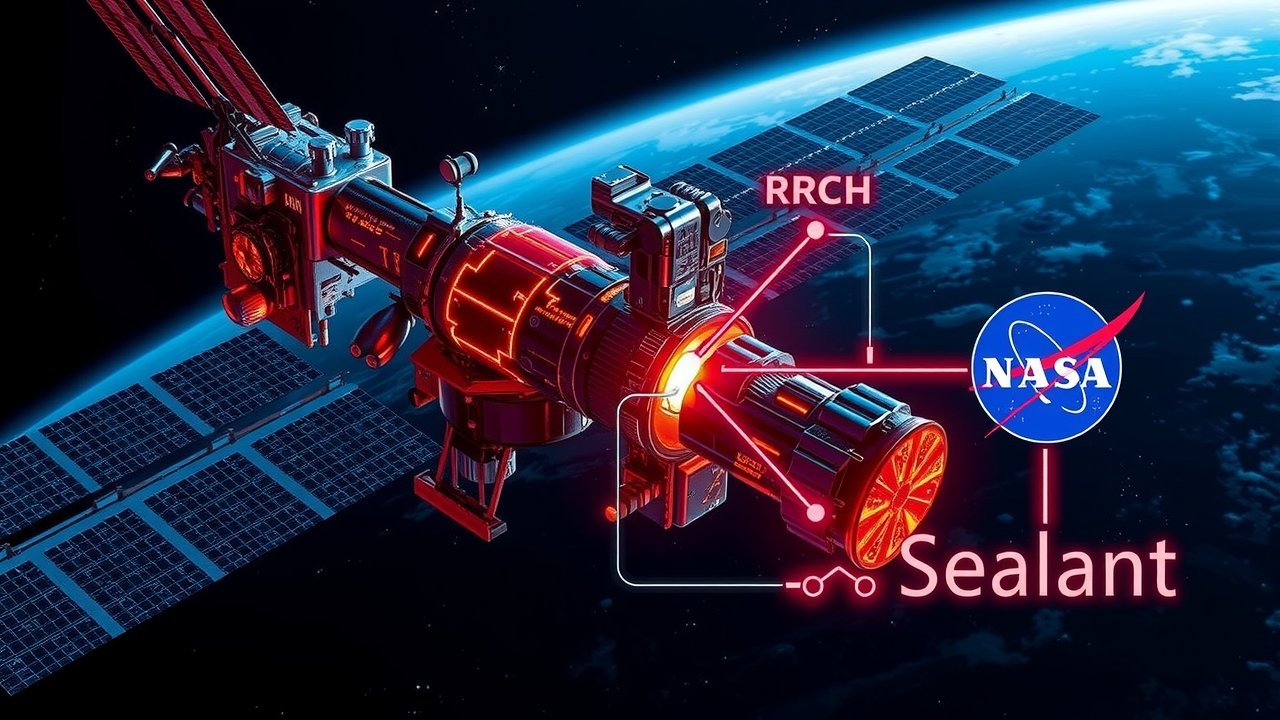
Space Tape to the Rescue: Roscosmos Fights ISS Air Leaks with Industrial Glue
The ultimate space soap opera continues! Our favorite orbital rust bucket is leaking air again, and the solution is exactly what you'd expect from a budget-strapped space agency trying to survive on prayers, duct tape, and Soviet-era engineering nostalgia.
Cosmonauts on the ISS discovered two new potential air leak sites in the transfer chamber of the Zvezda service module. The crew has already slapped a layer of Germetall-1 sealant—a high-strength industrial glue typically used to repair cast iron and steel piping on Earth—onto the first crack and is currently prepping to patch up the second one on the chamber's cone.
This orbital DIY session got so intense that Roscosmos had to suspend all planned structural repairs inside the chamber just to run extra diagnostic tests. Over at NASA, flight controllers weren't taking any chances and briefly ordered the Crew Dragon crew to prepare for emergency shelter before eventually letting them return to their normal science experiments.
This is far from a new leak. Engineers from both space agencies have been playing a very slow, very stressful game of hide-and-seek with these microcracks for over five years. The leak rate actually doubled back in 2024, dumping an estimated one kilogram of precious oxygen into the vacuum of space every single day.
While the Russian side keeps insisting that everything is totally fine and absolutely nominal, they had to keep the entire module at reduced pressure for weeks, occasionally pumping in fresh air just to keep the station inflated. The Zvezda module itself has been orbiting the Earth since July 2000, making it old enough to rent a car and apparently prone to mid-life crises.
Despite the station slowly turning into a high-tech colander, international partners recently agreed to keep flying the thing until 2030. One can only hope they have a Costco-sized supply of industrial sealant to get through the next four years of space exploration.
Source: NASA Spox
Comments
This is where the magic happens: AI reads your discussion and rewrites the article based on the most interesting comments. Each strong comment adds points to the meter below. Once the meter is full, the article updates live — no page reload needed.