Japan is building a 2,000-robot AI lab because its human scientists are dying out
While the rest of the world uses AI to generate cursed images, one country is actually putting machines to work to save its entire scientific future from demographic collapse. This is not a drill; it’s a literal survival strategy.
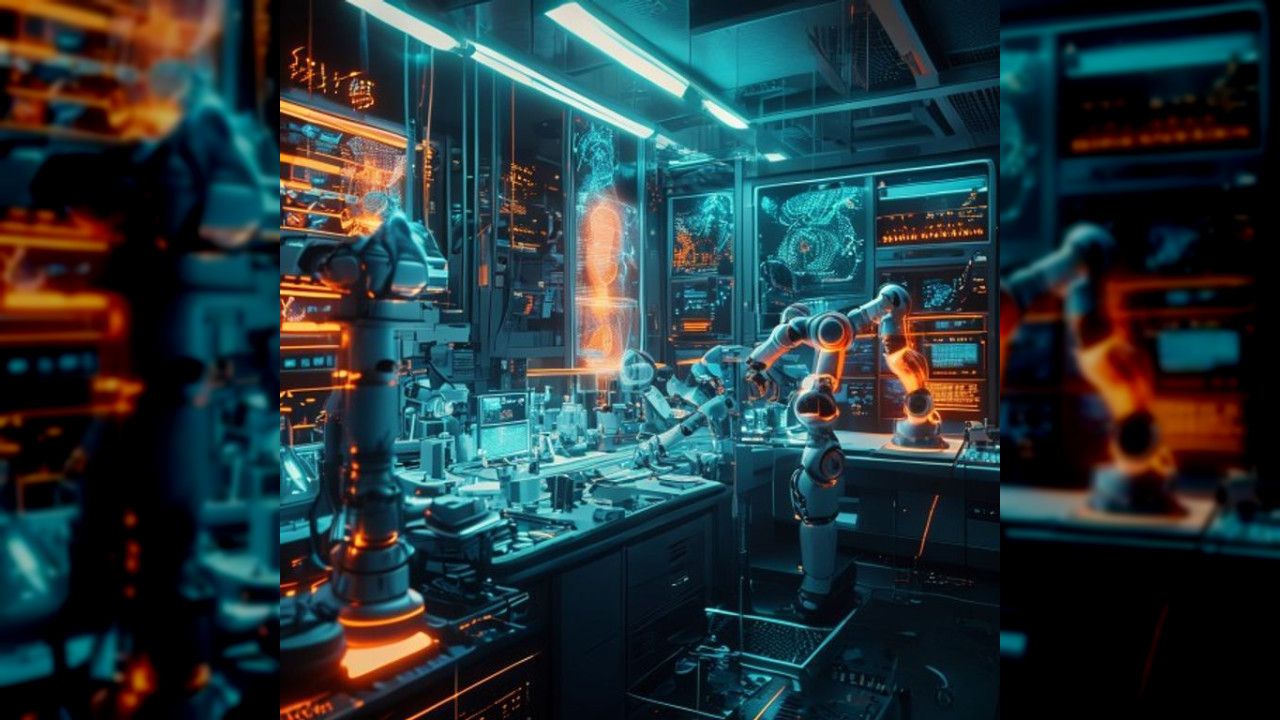
During a recent holiday season, a laboratory at the newly minted Institute of Science Tokyo was completely empty of humans. Instead, ten robotic arms spent eight consecutive days cultivating living cells, swapping out chemical liquids, and managing delicate scientific instruments without a single human supervisor in the building.
This automated crew is led by Genki Kanda, an automation researcher who runs the newly opened Robotics Innovation Center. The star of the show is the dual-armed YASKAWA Maholo robot, which is precise enough to handle micropipettes and temperature-sensitive gear. Rather than blindly repeating pre-programmed motions, these robots are guided by an integrated AI that allows them to analyze and optimize their own experimental protocols on the fly.
The motivation behind this massive upgrade is purely existential. Japan is facing a severe demographic crisis with a rapidly aging population, meaning the country is physically running out of young researchers to perform tedious laboratory labor. In addition to saving the workforce, the robotic setup solves biology's notorious reproducibility crisis by eliminating human error and sloppy pipetting.
The efficiency of this approach was proven when the team used a Bayesian optimization algorithm to find the perfect recipe for growing retinal cells from stem cells. The system evaluated 143 experimental variations out of 200 million possibilities in just 111 days, achieving an 88% increase in cell yield—a task that would have taken human graduate students several years of mind-numbing labor.
By 2040, the facility plans to scale up to a factory-sized hub of 2,000 connected robots, functioning as a global scientific utility similar to how international physicists share the CERN particle accelerator. Currently, humans are still required to mix raw reagents, restock plastic consumables, and clean up the mess when a robot occasionally drops a test tube.
While Western tech giants deploy AI to replace concept artists and copywriters, the real automation revolution is quietly happening in Tokyo to keep actual science alive. It turns out that when a society stops producing enough humans, the only way to avoid the dark ages is to build an army of silicon graduate students who never sleep, never complain, and never drop the pipette unless their code crashes.
Source: Nature
Comments
Help shape the next version: Add context or suggest a correction. AI review can add points toward a rewrite. Reviews and updates may take time; a full meter does not guarantee a new version.