MIT tailors 3D-printed bridge designs to the real quirks of concrete nozzles
Topology algorithms generate delicate lattices that real construction printers choke on. A new method from MIT bakes printhead limits directly into the math, generating buildable bridges in minutes.
Generative software has long excelled at designing structures that look breathtaking in a stress simulation but are nearly impossible to fabricate. In construction 3D printing, topology optimization algorithms routinely spit out hyper-intricate lattices full of sharp corners and discontinuous paths. Because an extrusion nozzle cannot pivot on a dime or stop and start without degrading the material, human engineers typically spend days manually simplifying those computer models back into something a gantry can actually extrude.
Researchers at the MIT tackled the bottleneck by integrating physical manufacturing constraints directly into the design phase. Using mixed-integer nonlinear programming, their system factors in nozzle turning radii, single-stroke toolpaths, and the strict tensile and compression limits of unreinforced concrete from the very start. Crucially, the optimization runs on an ordinary laptop: during testing, redesigning and re-meshing a structure took roughly ten minutes instead of days of manual CAD repair.
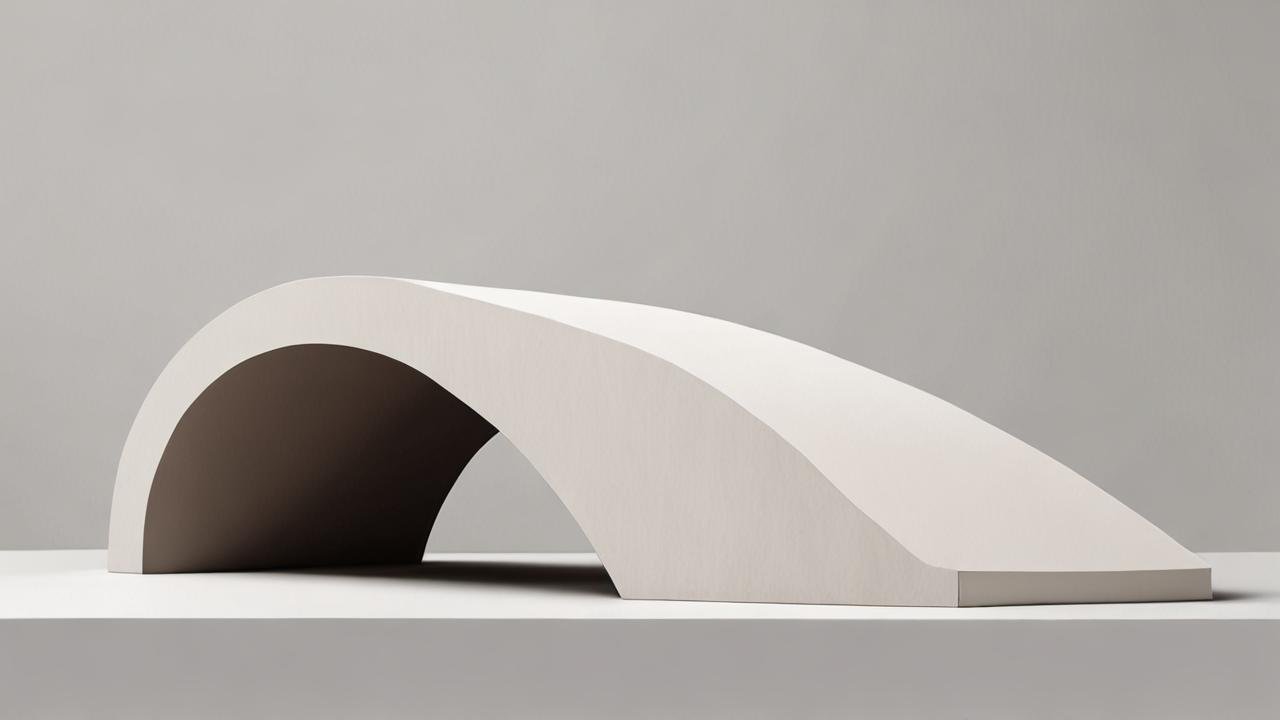
To verify the simulation, the team partnered with Autodesk's research facility in Boston to print a 2.3-meter experimental bridge. Extruded from off-the-shelf commercial mortar in approximately 30 minutes, the 408-kilogram structure was loaded with over 900 kilograms of concrete blocks. The arch held without perceptible deflection, matching the numerical model's behavior.
The test arch used 14% less material than a traditional solid counterpart would have required. That reduction came while printing with relatively coarse 40 mm beads; the researchers calculated that moving to a 10 mm extrusion width would enable finer geometry and reduce total mass by an additional 76.1% while maintaining load margins. Whether construction sites can reliably deposit 10 mm ribbons of fast-curing paste at commercial scale remains the unproven next step.
Source: habr
Primary source: MIT News
Comments
Help shape the next version: Add context or suggest a correction. AI review can add points toward a rewrite. Reviews and updates may take time; a full meter does not guarantee a new version.