NASA Just Ordered Rovers and Drones to Build a Massive Base on the Moon
The dream of living on another world is finally getting a blueprint. NASA is officially handing out hundreds of millions to private space tech firms to start building a permanent lunar colony. Here is what is actually going to the lunar south pole.
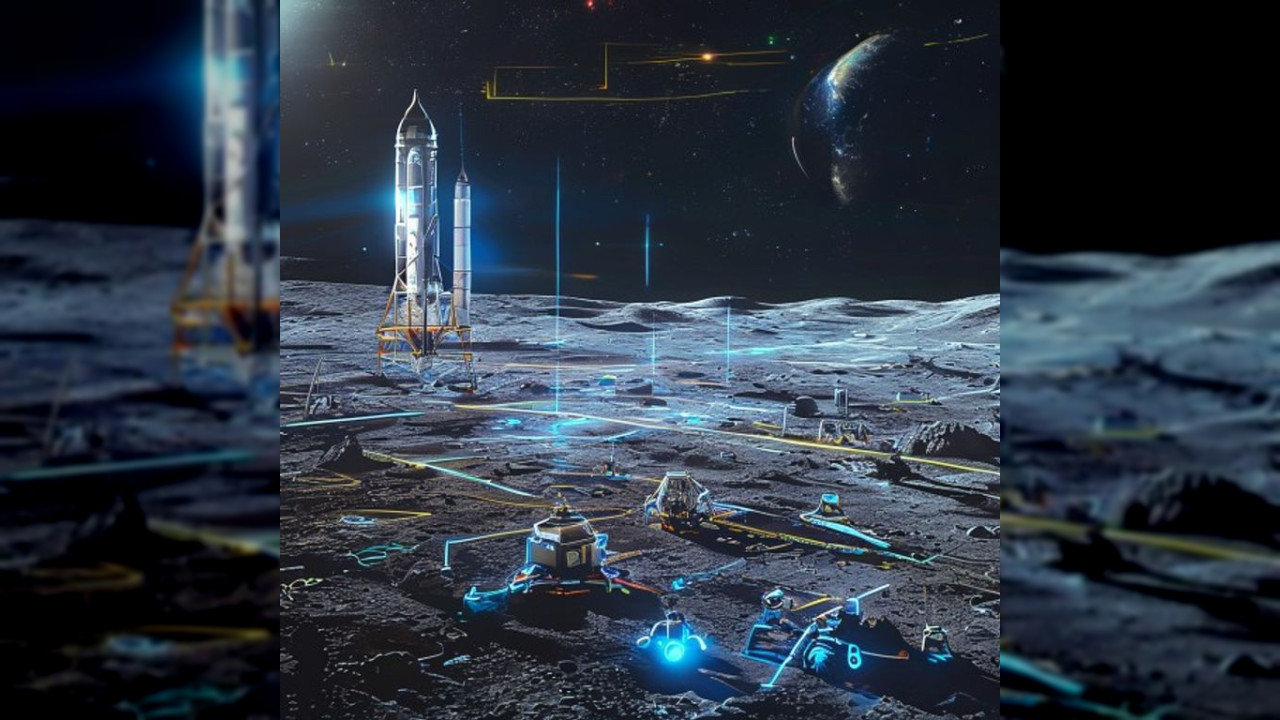
The initial phase of construction kicks off with hundreds of millions of dollars in contracts awarded to four American aerospace companies. Jeff Bezos's Blue Origin secured the job to build two massive lunar landers, which will act as the heavy-duty delivery trucks dropping off lunar rovers at the Moon's south pole. Those rovers themselves are being designed by Astrolab and Lunar Outpost, basically creating the ultimate off-road fleet for a world with no paved highways.
Firefly Aerospace is also stepping up to the launchpad, tasked with delivering the very first autonomous drones to the lunar surface. The grand plan is to have all of this heavy machinery landed and operational by 2028, ideally parking itself on the dusty regolith before the first human astronauts of the Artemis program even open their spacecraft doors.
This rapid ramp-up follows the recent success of the Artemis 2 mission, which saw four astronauts loop around the Moon. The upcoming Artemis 3 mission, slated for mid-2027, will up the ante by having crews practice docking the Orion capsule with landing systems being developed by Blue Origin and Elon Musk's SpaceX. If nobody accidentally hits the wrong button, two astronauts will actually step onto the surface in 2028.
Once those boots are on the ground, the second phase will run from 2029 into the early 2030s to build a permanent power grid. By the time the third phase rolls around in the mid-2030s, the base will feature permanent habitation modules designed for long-term stays. The lunar base program manager, Carlos Garcia-Galan, envisions a sprawling outpost spanning hundreds of square kilometers, with its borders literally patrolled and marked by automated drones called MoonFall.
To make sure nobody accidentally parks their rover on someone else’s property, NASA's Jared Isaacman noted that these drone-marked borders are meant to establish territorial boundaries and ensure mutual respect among different spacefaring nations.
Humanity is officially preparing to export its favorite pastime—border disputes and real estate wars—directly to the stars. The next decade will show whether the Moon becomes a thriving scientific utopia or just a very expensive, dusty corporate business park.
Source: AP News
Comments
Help shape the next version: Add context or suggest a correction. AI review can add points toward a rewrite. Reviews and updates may take time; a full meter does not guarantee a new version.