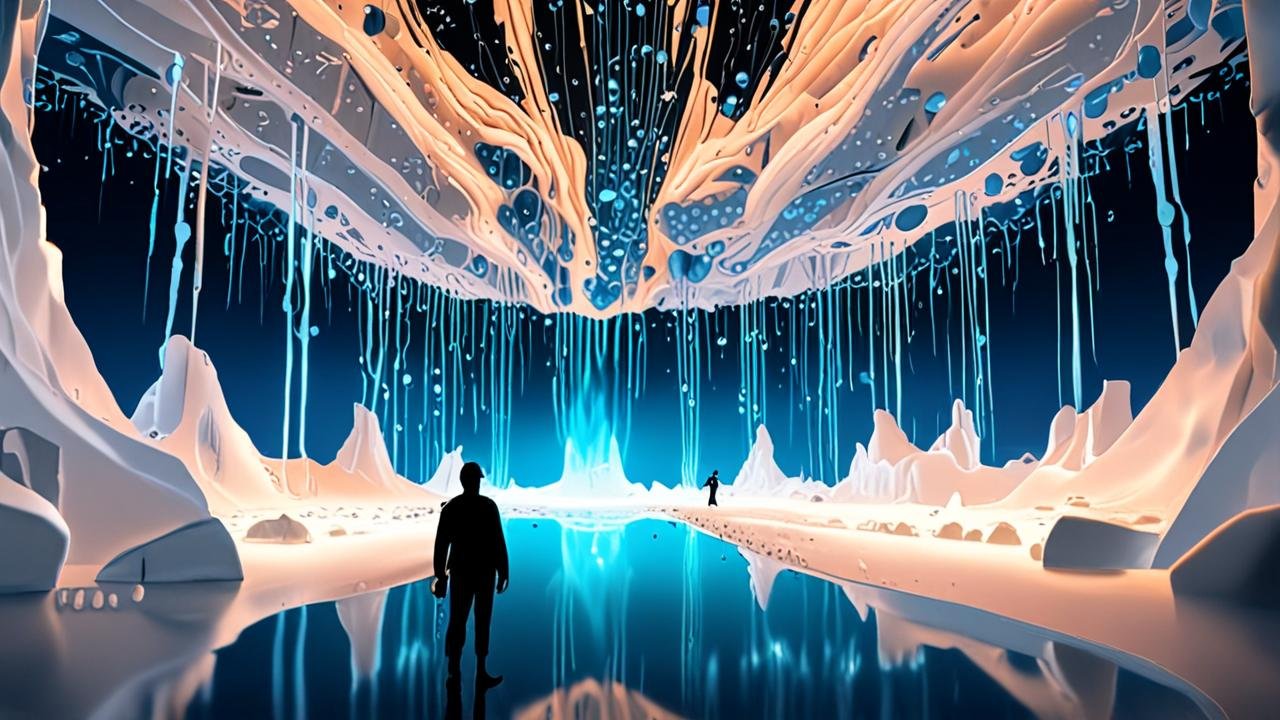
Francis Halzen Wins Nobel for Turning Antarctic Ice into a Giant Trap
The Nobel Committee just handed a gold medal to Francis Halzen for his bizarre idea of using a cubic kilometer of frozen Antarctic ice to catch invisible space ghosts. Finally, some expensive cold storage that actually pays off.
The Nobel Prize in Physics for 2026 was awarded to Francis Halzen, the mastermind behind the IceCube Neutrino Observatory. He convinced the scientific community to drill deep into the South Pole ice and bury thousands of basketball-sized sensors to track subatomic particles that usually just fly through planets like they aren't even there.
These particles, known as neutrinos, are essentially the universe's most antisocial travelers. Because they rarely bump into anything, catching them is like trying to find a specific grain of sand in a desert while wearing a blindfold. Halzen realized that by using the planet itself as a giant shield against cosmic noise, the pristine, transparent ice acts as the perfect medium to spot the faint blue flashes caused by the rare collisions.
Since its launch, the detector has successfully pinpointed high-energy neutrinos from cosmic sources billions of light-years away, effectively birthing a new field of neutrino astronomy. Scientists now use these particles to map the cosmos in ways that traditional light-based telescopes simply cannot achieve.
It is truly heartwarming to see humanity spend millions of dollars to build an ice-trap for particles that don't care if we exist or not. While we struggle to get reliable Wi-Fi in our own basements, the scientific elite is busy eavesdropping on the whispers of ancient galaxies through a frozen block of Antarctica. Truly, the best way to understand the universe is to ignore everything else and stare at a block of ice for a decade.
Source: NobelPrize.org
Comments
Help shape the next version: Add context or suggest a correction. AI review can add points toward a rewrite. Reviews and updates may take time; a full meter does not guarantee a new version.