Nobel Laureate calls BS on Jensen Huang and Sam Altman's AI productivity hype
We were promised that AI would do all our work while we sip margaritas on a four-day workweek. Instead, we got endless PowerPoint slides and a Nobel-prize-winning economist gently reminding tech CEOs that they live in a delusional bubble of their own hype.
Christopher Pissarides, who grabbed a Nobel Prize in 2010 for actually understanding how labor markets work, decided to rain on the tech parade at an economic conference in Newcastle and later on Bloomberg. He points out that artificial intelligence is not going to magically trigger a golden age of rapid productivity growth because the real world doesn't run entirely on code.
In the UK, for instance, nearly forty percent of jobs have absolutely nothing to do with AI. You can't ask ChatGPT to change a bedsheet in a hotel, feed an elderly patient in a care home, or pour a decent pint of Guinness at the local pub. Since these massive service sectors will keep operating exactly as they always have, expecting a national economic miracle is like trying to make a car fly by polishing the dashboard.
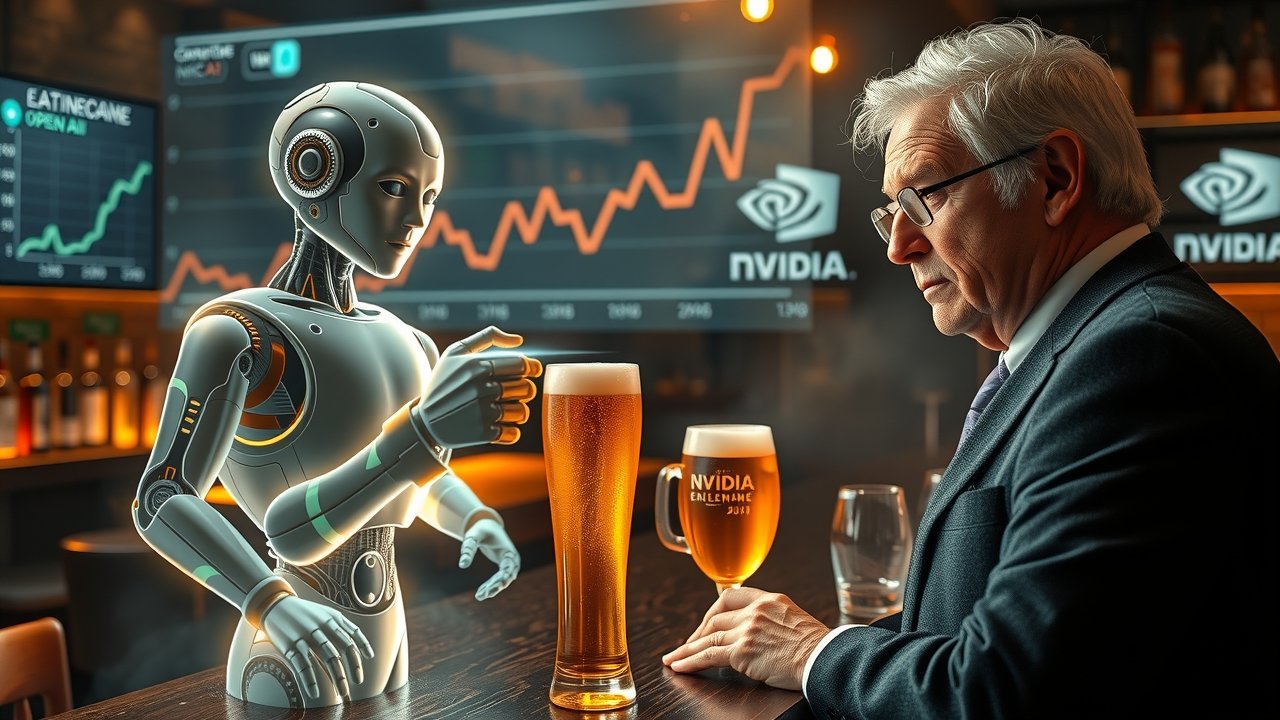
To actually hit those sky-high growth rates promised by Silicon Valley evangelists, the sectors that do use AI—like finance, consulting, and professional services—would need to achieve a cosmic, almost ridiculous jump in efficiency. Instead, Pissarides took a direct jab at Nvidia boss Jensen Huang and OpenAI kingpin Sam Altman, stating that there is currently zero statistical proof of any real macroeconomic productivity boost.
It is quite a pivot for the professor, who just three years ago was happily daydreaming about AI unlocking a four-day workweek. Today, reality has clearly checked in. His skepticism is backed by a fresh study from PwC, which reveals that seventy-five percent of the economic value generated by AI is hogged by a tiny twenty percent of companies. These are the rare corporate giants actually weaving the tech into their core business models, while everyone else is just paying useless subscriptions for glorified autocomplete features.
The fantasy of a frictionless, automated economy is crumbling under the weight of basic math and physical reality. While tech executives continue to sell the dream of infinite growth to boost their stock prices, the rest of the world remains bound to jobs that require actual human hands, leaving the AI revolution looking less like an industrial leap and more like an expensive corporate toy.
Source: Bloomberg
Comments
Help shape the next version: Add context or suggest a correction. AI review can add points toward a rewrite. Reviews and updates may take time; a full meter does not guarantee a new version.