NVIDIA Launches Open-Source Humanoid Robot Platform to Crush Elon Musk’s Optimus
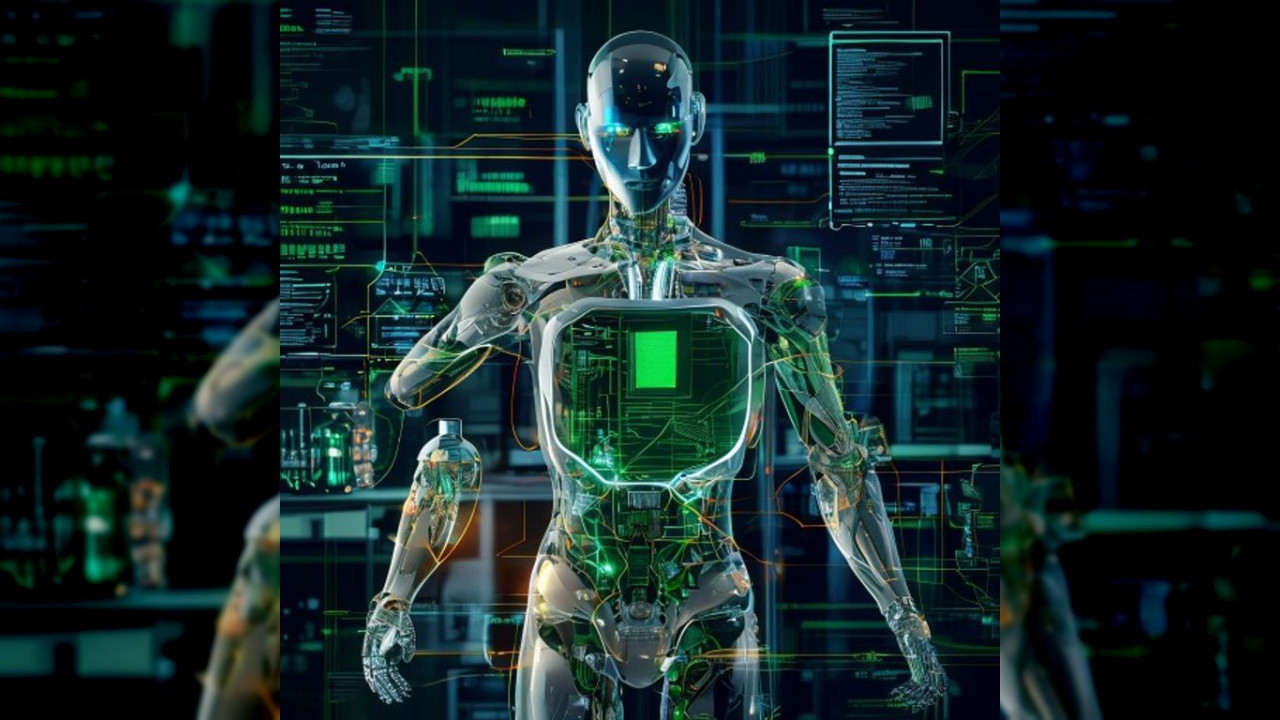
Finally, some real sci-fi progress instead of another boring chatbot. The green chip giant is basically handing out a DIY kit for building your own walking, grabbing metal servant, making the whole robot-building nightmare look like assembling cheap furniture.
Instead of forcing researchers to spend years soldering random wires and writing drivers from scratch, NVIDIA decided to bundle a complete, pre-tested humanoid package. The physical body is built on the H2 Plus chassis by Chinese robotics firm Unitree, while the highly sensitive, five-fingered hands are provided by Singaporean company Sharpa.
The computational brain powering this metal beast is NVIDIA's own Jetson AGX Thor T5000 processor, running on the advanced Blackwell architecture. This system packs 128 gigabytes of memory and delivers 2070 teraflops of processing power, which is probably enough to let the robot contemplate its own existence while folding your laundry.
To keep the robot from constantly faceplanting, the hardware is packed with a 140-degree wide-angle head camera, wrist-mounted cameras, and high-torque motors capable of pulling 360 Newton-meters in the legs. The software suite, called Isaac GR00T, handles everything from simulating physical movements in a safe digital sandbox to deploying real-time learning models directly onto the hardware.
This open ecosystem is already being adopted by heavyweights like Stanford, UCSD, and ETH Zurich, with NVIDIA also promising to release a cheaper workflow for the smaller Unitree G1 model on GitHub and Hugging Face. The commercial-grade H2 Plus chassis will be available for purchase by late 2026.
This move places the leather-jacket-wearing billionaire Jensen Huang directly in the path of Elon Musk's proprietary Optimus project. While some tech moguls build walled gardens to lock in their robotic supremacy, opening the gates to universities worldwide might just turn the race for physical AI into a chaotic, crowdsourced free-for-all.
Source: NVIDIA
Comments
Help shape the next version: Add context or suggest a correction. AI review can add points toward a rewrite. Reviews and updates may take time; a full meter does not guarantee a new version.