Nvidia Just Unleashed RTX Spark to Obliterate Apple Silicon on Windows
Hold onto your power bricks because the PC hardware landscape just changed forever. The green giant is officially entering the consumer CPU arena, and they brought a literal nuke to a knife fight. Thin laptops are about to get absurdly powerful.
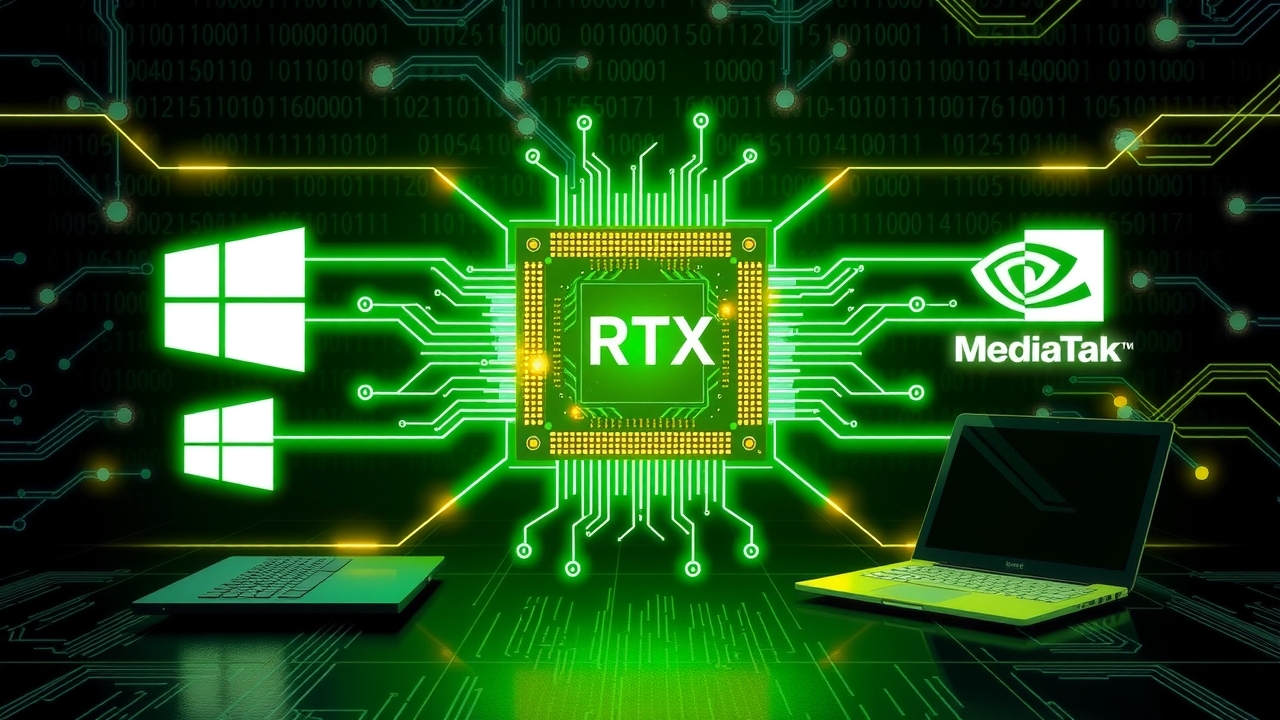
Nvidia teamed up with mobile chip designer MediaTek and foundry giant TSMC to build the RTX Spark on a cutting-edge 3-nanometer process. They crammed a 20-core ARM processor—split evenly between screaming-fast performance cores and battery-saving efficiency cores—right alongside a massive Blackwell graphics engine. This means they are stuffing server-grade power into ultra-thin laptops that do not even have space for a dedicated graphics card.
Instead of relying on slow, traditional internal connections, this beast uses an ultra-fast NVLink-C2C bridge that moves data five times faster than standard PCIe 5.0 lanes. It hooks up directly to 128 gigabytes of ultra-fast memory, bypassing the bottlenecks that usually turn high-end laptops into expensive space heaters. This architecture allows the chip to locally run monstrous AI language models with 120 billion parameters, turning a standard thin-and-light notebook into a pocket-sized supercomputer.
Hardware partners are already lining up to dump their old silicon, with brand new models announced from Asus, Dell, HP, Lenovo, and MSI. Even Microsoft is joining the party, slapping this silicon into a high-end Surface Laptop Ultra and rewriting Windows to natively support advanced AI agents. Software makers are scrambling too, with Adobe rewriting Photoshop and Premiere to run natively on this new architecture, alongside major creative suites like Blender and DaVinci Resolve.
The dream of a Windows laptop that actually lasts all day without sacrificing the ability to render heavy 3D scenes or run local AI models is finally within reach. It seems the monopoly of Apple Silicon is about to face its most terrifying challenger yet, provided Microsoft does not mess up the software translation layer as usual.
Source: NVIDIA
Comments
Help shape the next version: Add context or suggest a correction. AI review can add points toward a rewrite. Reviews and updates may take time; a full meter does not guarantee a new version.