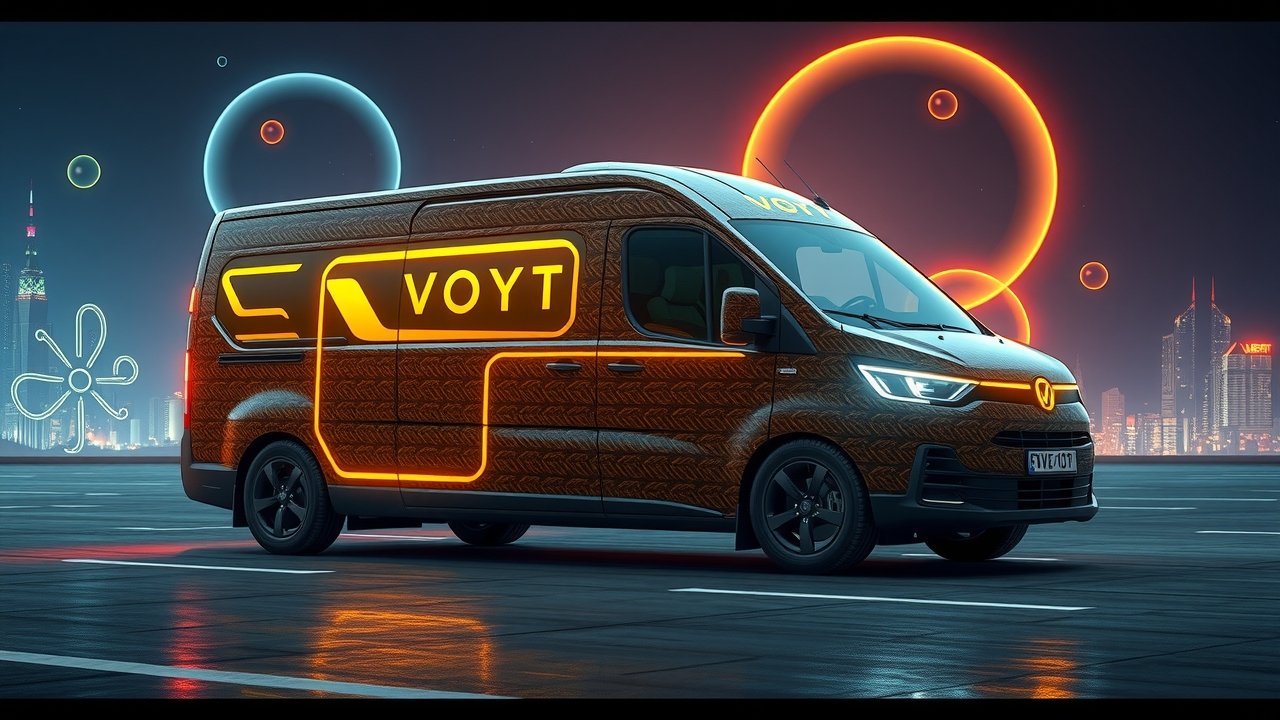
Nuclear titan Rosatom unveiled the Voyt LCV electric van boasting a 300km range
When a state nuclear power giant suddenly decides it needs to manufacture urban delivery trucks, standard logic takes a back seat while high-flying corporate ambitions steer straight into the electric vehicle hype train.
The composite division of Russian nuclear monopoly Rosatom showcased a full-scale mock-up of its new delivery vehicle named after project leader Roman Voyt. Designed strictly for last-mile delivery tasks, the two-seater Voyt LCV promises a payload capacity of 600 kilograms alongside a cargo volume of three cubic meters.
Engineers squeezed a 32 kWh battery into a hollow carbon-composite frame that doubles as the vehicle's structural chassis. This battery setup supposedly offers a 300-kilometer range under the obsolete NEDC test cycle, which the creators boldly claim remains sufficient even during freezing winters with full heating blasting.
The modular chassis allegedly serves as a universal base capable of hosting everything from urban hatchbacks to crossovers and minibuses. Company management claims that 60 percent of all components originate internally from nuclear enterprise factories, promising that scaling production to 10,000 units annually will magically align production costs with basic internal combustion vehicles.
Building electric delivery vans out of expensive carbon fiber while relying on outdated testing cycles represents the pinnacle of state-funded engineering experiments. Time will tell if carbon-composite delivery trucks ever replace humble commercial fleets, or if this remains another grand PowerPoint triumph.
Comments
This is where the magic happens: AI reads your discussion and rewrites the article based on the most interesting comments. Each strong comment adds points to the meter below. Once the meter is full, the article updates live — no page reload needed.