Samsung returns to PC silicon with 4nm standalone AI accelerator GAIA
Oh look, another corporate giant is trying to save us from memory bottlenecks by throwing more custom silicon at our faces. Because what our laptops really needed wasn't better battery life, but a dedicated heater for local LLMs.
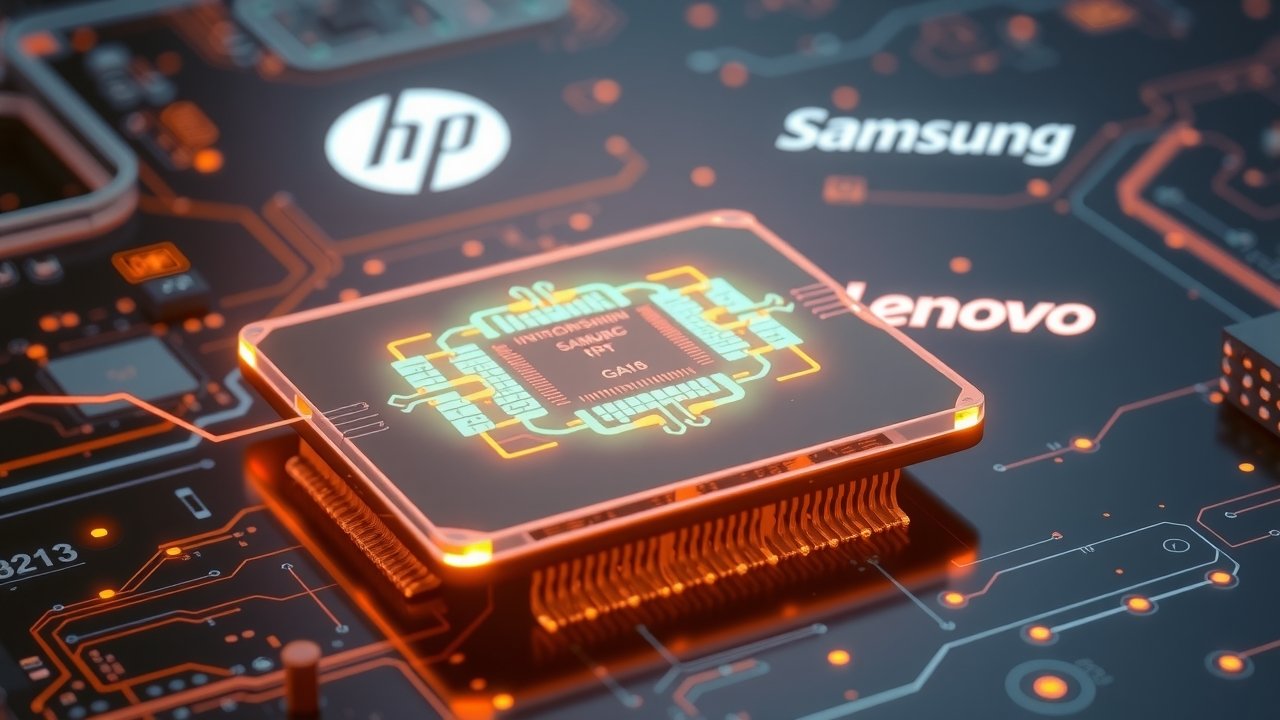
The semiconductor division of Samsung has sent early prototypes of its new 4-nanometer co-processor, codenamed GAIA, to HP and Lenovo for real-world testing. This marks the Korean giant's first major attempt to slide back into the PC silicon market since they abandoned their Chromebook chip experiments back in 2012.
Unlike the current hype-train designs from Intel, AMD, and Qualcomm, which cram a tiny NPU unit inside the main processor like an afterthought, this new hardware is a completely independent AI accelerator. It relies on a trick called Processing-in-Memory, or PIM, which essentially means putting the brain directly inside the DRAM modules.
This architectural stunt is designed to obliterate the classic memory wall that makes running large language models locally on a laptop feel like watching paint dry. By doing the math right where the data lives, the chip bypasses the bottleneck that usually chokes traditional processors during heavy local AI tasks like image generation or real-time translation.
The catch is the timeline, with mass production scheduled for 2027. By the time this silicon actually hits the shelves, competing chipmakers will have already launched several generations of their integrated NPUs.
It seems like a wild gamble on a future where people actually want to run massive AI models locally on their laptops instead of just querying the cloud. If the cloud-dependency bubble pops, this dedicated silicon might make traditional CPUs look like ancient calculators, but if it doesn't, everyone will just have a very expensive, very warm paperweight inside their laptops.
Comments
Help shape the next version: Add context or suggest a correction. AI review can add points toward a rewrite. Reviews and updates may take time; a full meter does not guarantee a new version.