SpaceX and Nvidia Want to Launch 1M AI Supercomputers into Space
Since Earth is running out of electricity to feed hungry neural networks, Elon Musk and Nvidia are moving the entire AI circus straight into orbit.
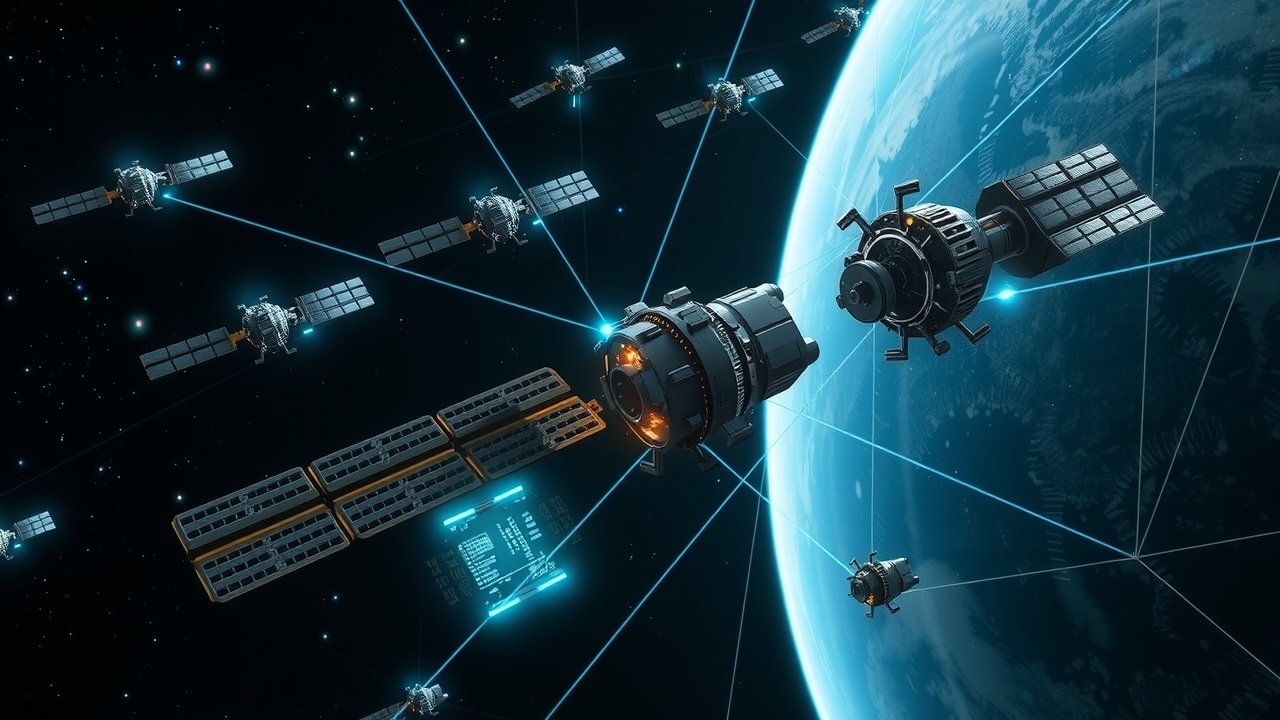
SpaceX has officially partnered with Nvidia on the Starmind AI1 project, an architecture designed to transform satellites into distributed data center nodes. The plan builds on hardware introduced earlier this year, with regulatory filings submitted to the FCC requesting permission to deploy up to one million solar-powered compute satellites into low Earth orbit.
The orbital hardware stack will integrate Nvidia's upcoming Vera CPUs and Rubin GPU accelerators. During a recent call with investors, Elon Musk highlighted the hardware as an exclusive partnership choice, aiming to escape terrestrial power grid constraints by harvesting continuous solar radiation and dumping thermal excess directly into cosmic vacuum.
According to technical figures reported by Reuters, a single AI1 satellite unit is expected to deliver around 150 kW peak power and 120 kW compute output. Nodes will communicate through inter-satellite optical laser channels using modular chassis designed for hardware swaps, with initial orbital compute trials targeted for late 2027.
While optical laser links enable distributed operations, current benchmarking studies show that severe data latency across orbital clusters makes space infrastructure viable for handling AI inference workloads, yet vastly inferior to ground facilities for training massive frontier models.
Shifting multi-gigawatt power bills off Earth solves local grid meltdowns, but launching millions of delicate accelerators into high-radiation orbital lanes risks turning low Earth orbit into an extraordinarily expensive floating graveyard of desynchronized GPUs.
Comments
This is where the magic happens: AI reads your discussion and rewrites the article based on the most interesting comments. Each strong comment adds points to the meter below. Once the meter is full, the article updates live — no page reload needed.