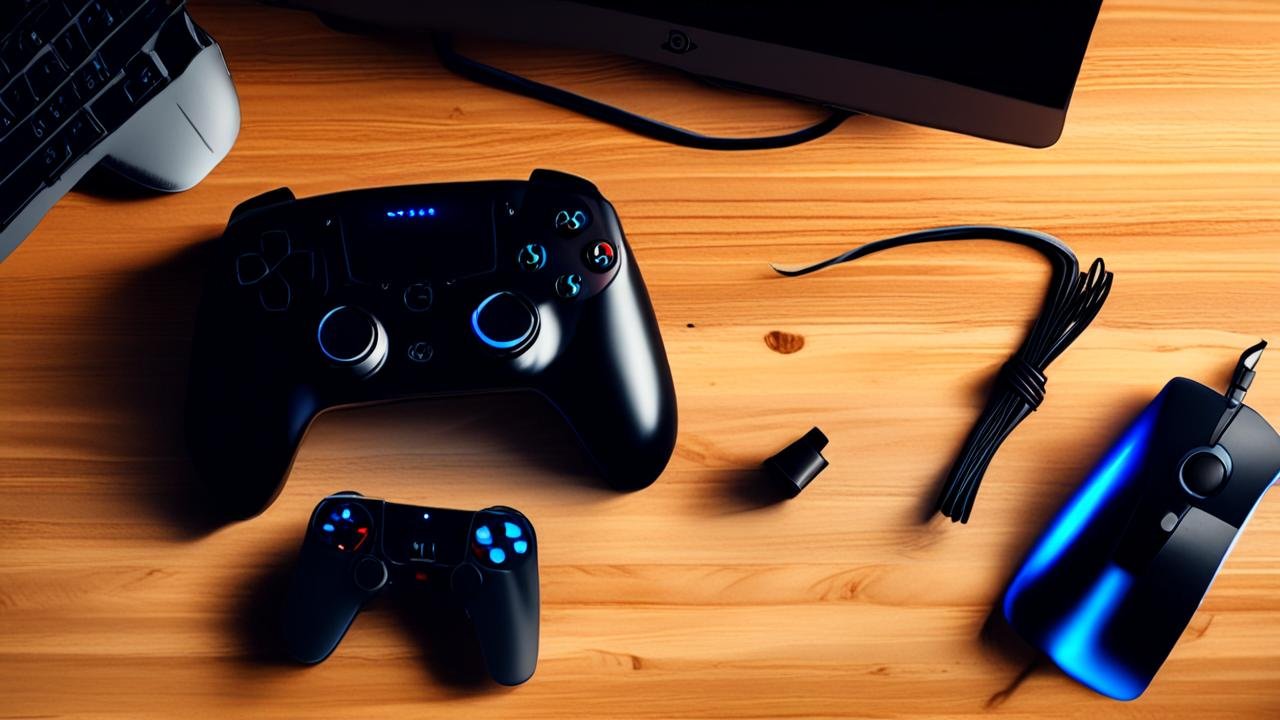
A Developer Turned the Steam Controller Into a Self-Driving Gadget That Crawls to Charge
Peak engineering has officially arrived: instead of moving an arm two inches to plug in a gamepad, someone built an autonomous system that makes the gadget scoot across a desk on sheer vibration.
A developer going by the handle FossPrime launched an open-source experiment called Steam Controller Auto Charge, designed to solve the exhausting human chore of placing a gamepad onto a dock. Rather than adding wheels or robotic arms, the setup relies on the built-in haptic vibration motors of the Steam Controller to physically inch the hardware across flat surfaces, turning high-tech haptics into the world's clunkiest propulsion engine.
To navigate toward electrical salvation, the controller relies on a desktop webcam mounted strictly overhead. Computer vision tracks the device's coordinates in real time, calculating a path toward the charging dock and correcting course by firing distinct vibration pulses through individual sides of the chassis to steer it like an ultrasonic tank.
The roots of this crawling phenomenon go back to another community project, which proved that browsers could hijack the gamepad via WebHID. Because Google Chrome and other Chromium browsers provide low-level hardware access directly inside a tab without extra drivers, web code can pulse each motor at specific resonant frequencies to produce directional movement. As an added bonus of Valve engineering, tinkerers recently pointed out that the controller's haptics are even programmed to play the infamous Wilhelm scream whenever the gyro detects a sudden free fall inside Steam Big Picture mode.
Humanity is pouring millions into self-driving cars and humanoid labor, yet the true frontier of automation is an abandoned peripheral painfully wiggling across a mousepad just to suck power from a wall.
Source: tomshardware
Comments
Help shape the next version: Add context or suggest a correction. AI review can add points toward a rewrite. Reviews and updates may take time; a full meter does not guarantee a new version.