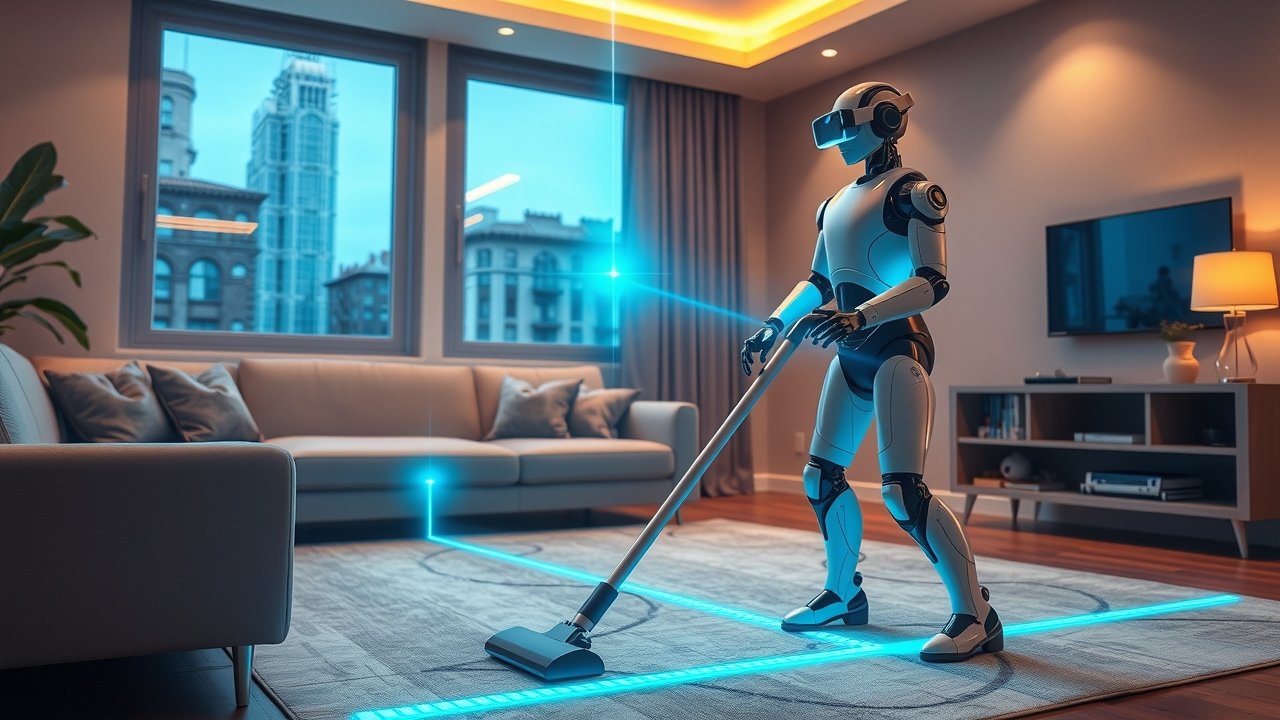
Rent a $30/hr humanoid maid from Tau Robotics that is actually human-operated
The tech world promises autonomous home helpers, but Tau Robotics is trying a far lower-tech shortcut in San Francisco: putting a living human behind the virtual steering wheel of a metal frame.
The startup Tau Robotics launched its home service offering early access to a few select households in San Francisco. Early adopters get a metallic assistant rolled up to their doorstep, provided they don't mind the awkward technical secrets hiding under the hood.
Chief executive Alex Koch admitted that current artificial intelligence isn't quite ready to handle the chaotic mess of a real living room on its own. Instead, the company relies on human operators sitting offsite to teleoperate the machines, while onboard algorithms handle minor sub-tasks like keeping the robot from walking into walls.
Promotional clips released by the firm show the metal helper hopping out of a minivan like an eager temp worker ready to tackle chores. However, Ken Goldberg, an engineering professor at UC Berkeley, voiced heavy skepticism over whether these bots can handle basic domestic labor without constant hand-holding.
Pointing out that simply picking up random objects off a cluttered floor remains a monumental struggle for modern robotics, Ken Goldberg suggested that the promotional footage might be heavily edited, accelerated, or staged in carefully prepared environments. Alex Koch conceded that while autonomous deep-cleaning is far off, their teleoperated humanoids can already handle vacuuming floors and wiping down kitchen countertops.
Paying thirty bucks an hour to have a remote worker watch someone's messy living room through a VR headset while controlling a $100,000 metal suit might not be the AI revolution promised by Silicon Valley, but it certainly proves that tech companies will construct the most elaborate mechanical detours just to reinvent gig-economy labor.
Source: ABC News
Comments
This is where the magic happens: AI reads your discussion and rewrites the article based on the most interesting comments. Each strong comment adds points to the meter below. Once the meter is full, the article updates live — no page reload needed.