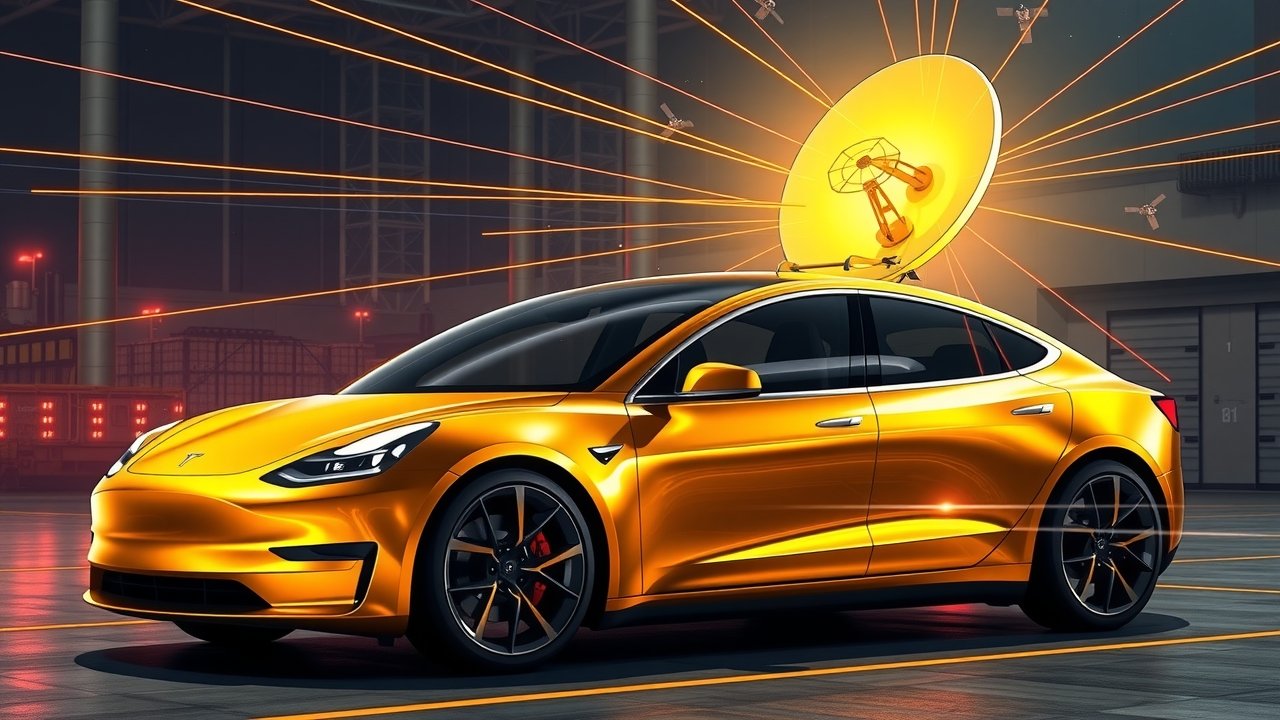
Tesla slapped a Starlink satellite dish on its driverless Cybercab
Because nothing says peak tech innovation quite like strapping a space dish to a steering-wheel-less car that operates in cities with perfectly fine cell signals. Elon Musk's wild ecosystem crossover is finally here.
Photos shared by the official Tesla Robotaxi account revealed a golden Cybercab parked at the Texas Gigafactory, sporting a sleek dish integrated directly into its roof. This confirms earlier architectural schematics showing the vehicle paired with the newly minted Starlink V5 hardware.
The fifth-generation satellite terminal boasts download speeds above 375 Mbps while drawing just 35 to 50 watts of power. It is roughly 35% smaller and 62% lighter than its predecessor, though industry watchers previously noted the V5 was originally intended for indoor stationary use rather than getting blasted with highway wind.
Under the hood, driving decisions are handled entirely offline by the onboard Tesla AI4 computer, meaning the dish isn't even necessary for navigation. Tesla aims to use the satellite link purely for fleet management in dead zones, despite the robotaxi service currently being restricted to heavily covered urban hubs like Austin and Miami.
Over 100 finished Cybercab units have already been spotted sitting in factory lots since production kicked off earlier this year. However, regulatory hurdles mean the company still cannot legally operate or sell the steering-wheel-free vehicles without human supervisors present.
Building hundreds of futuristic vehicles that sit idle in parking lots while waiting for government permits seems like an expensive hobby. Strapping space-grade internet onto a car that cannot legally drive itself yet remains the ultimate symbol of putting the cart before the horse.
Source: Electrek
Comments
This is where the magic happens: AI reads your discussion and rewrites the article based on the most interesting comments. Each strong comment adds points to the meter below. Once the meter is full, the article updates live — no page reload needed.