AI agents now trigger half of Vercel's 6 million daily code deploys, not humans
AI is no longer just a fancy autocomplete; it is literally taking over the build pipeline. While human developers are busy drinking coffee, autonomous coding bots are running millions of deployments and shifting their loyalty to whatever model is cheapest.
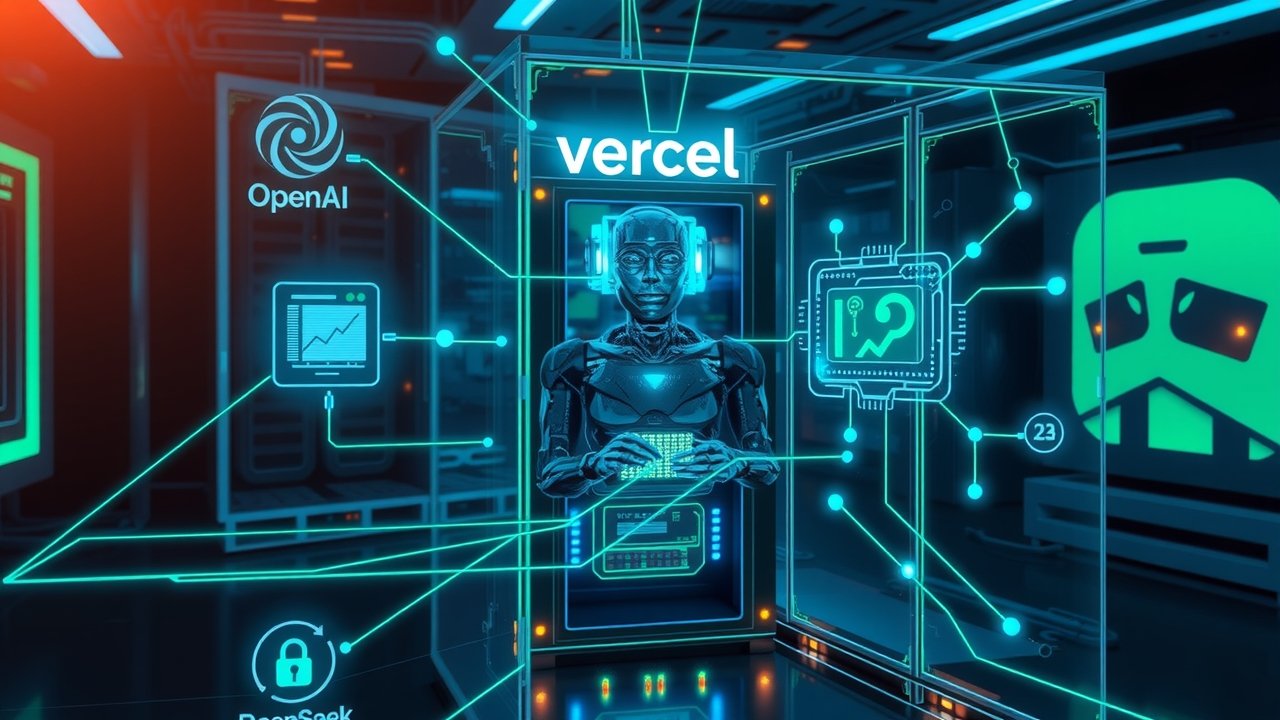
Vercel CEO Guillermo Rauch revealed that his platform processes six million code deployments every single day. Shockingly, half of these deployments are triggered by autonomous AI coding agents rather than human developers. Over a trillion tokens daily pass through their AI Gateway, which acts like a giant traffic controller routing requests to hundreds of different models.
The era of swearing loyalty to a single AI provider like OpenAI or Anthropic is officially dead. Companies have realized they can hot-swap models, data platforms, and sandboxes like LEGO bricks to save cash, transforming prestigious AI labs into simple commodity utilities. This plug-and-play approach has triggered a massive gold rush for cheaper open-source alternatives.
According to traffic data, the Chinese model DeepSeek captured a staggering 17% of all gateway tokens in just one month, up from less than 1%. However, because it is dirt cheap, it only accounts for 1% of the revenue. Meanwhile, Anthropic remains the luxury brand, gobbling up 65% of total spend because developers trust it with heavy-duty back-office tasks.
These coding bots have two main use cases: writing endless lines of code and acting as internal corporate assistants. Instead of begging the data team for a custom dashboard, managers now just ask an AI agent to fetch real-time sales numbers. This spells trouble for traditional SaaS giants, whose business models rely entirely on locking up customer data in proprietary silos.
The massive bot army comes with terrifying security risks. The president of Airbus recently complained that a single engineer using an unconfigured AI tool could accidentally upload decades of proprietary aerospace C++ code directly to the cloud for model training. To prevent these catastrophic leaks, Vercel launched a framework called Eve alongside a secure Sandbox to keep agents on a very tight digital leash.
The tech landscape is rapidly splitting into two factions: those who want all-in-one proprietary AI gods, and those who treat models like disposable commodity hardware. By fighting for open protocols, the team at Vercel is betting that the future of software engineering belongs to modular lego blocks rather than monolithic corporations. Whether humans will still have jobs to assemble those blocks is another question entirely.
Source: TechCrunch
Comments
Help shape the next version: Add context or suggest a correction. AI review can add points toward a rewrite. Reviews and updates may take time; a full meter does not guarantee a new version.