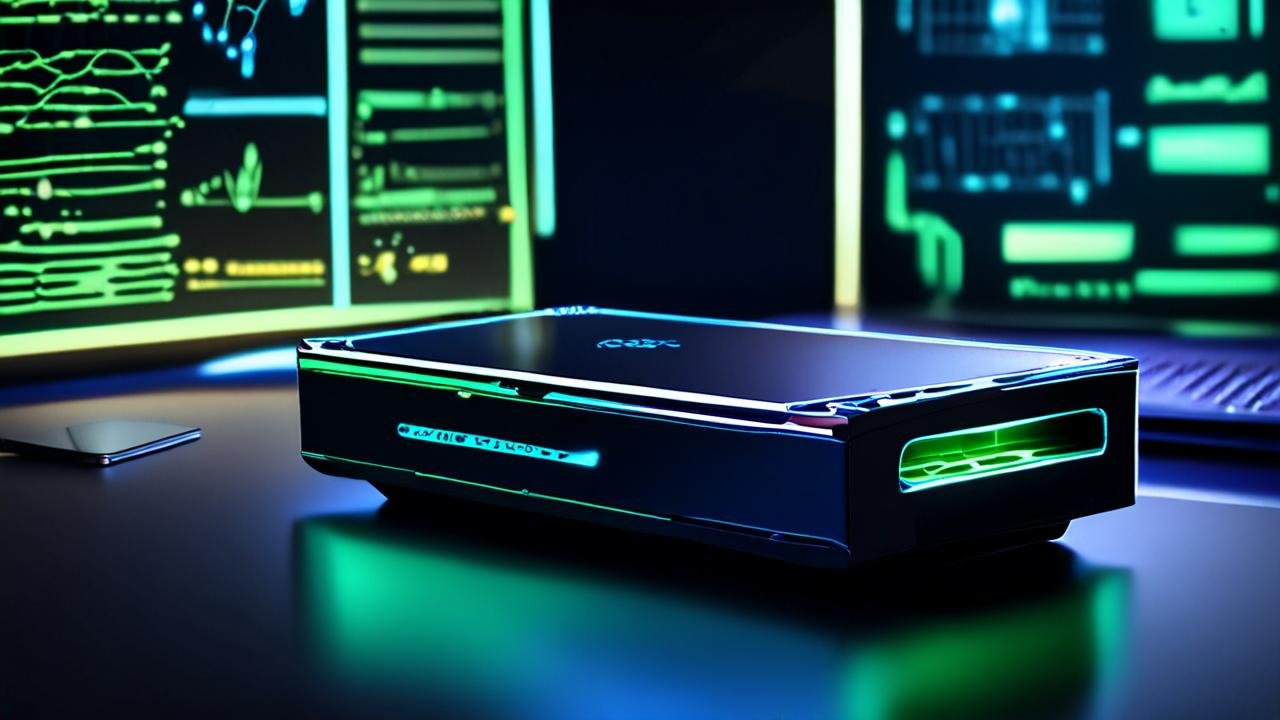
WiCi Made a Wireless RTX 5060 Ti for a Wild $2,600
Hardware engineers finally figured out how to eliminate desk clutter forever, though it requires torching an absurd amount of money just to broadcast graphic frames through the air.
Hardware startup WiCi rolled out the WiCi One, an external graphics box running entirely over Wi-Fi 7 with an early-bird sticker price of $2,000 that jumps straight to $2,600 at retail. Under the hood sits a midrange GeForce RTX 5060 Ti with 16 GB of GDDR7 memory on the Blackwell architecture, accompanied by a 4 TB PCIe 5.0 solid-state drive.
Because large language models devour memory like snacks at an office party, the internal drive acts as an emergency spillover container right next to the graphics silicon. Shuffling gigabytes of weights over radio frequencies would choke a local network immediately, so pinning weights directly to internal storage keeps the wireless spectrum somewhat usable.
To bypass the laws of physics that typically grant physical slots microsecond CPU interconnects, the company developed a custom virtual driver that convinces the operating system the card lives inside the motherboard. The software engine handles compression, caching, and deduplication behind the scenes, offering an OpenAI-compatible HTTP API alongside Python libraries for shared network access.
Official latency figures were captured using Wi-Fi 6 on a server-grade RTX 4090D rather than this retail hardware configuration, leaving gaming frametimes completely unverified. Meanwhile, wired competitors like the Gigabyte Aorus box using Thunderbolt 5 retail for $700, and OCuLink-based solutions like Morefine G2 land near $1,100.
Paying four times the street value of a mid-tier graphics card purely to eliminate a single copper cable reveals the absolute peak of modern gadget absurdity. Watching local machine learning morph into an outrageously priced indoor radio broadcast proves that any product tagged with artificial intelligence can command luxury prices regardless of practical logic.
Source: WiCi
Comments
This is where the magic happens: AI reads your discussion and rewrites the article based on the most interesting comments. Each strong comment adds points to the meter below. Once the meter is full, the article updates live — no page reload needed.