AI designs cancer-fighting proteins in days, and Zuckerberg gives it away free
While Big Tech locks up their AI behind heavy paywalls and enterprise subscriptions, a biotech lab backed by Mark Zuckerberg just dropped an open-source model that designs cancer-killing proteins in days. This is actual sci-fi.
Scientists at the Chan Zuckerberg Biohub released a massive "world model of protein biology" called ESMC, and they put it on the internet for free under the MIT license. Instead of hoarding the tech, they are letting any lab in the world download a system that generates brand-new proteins to target specific diseases like cancer.
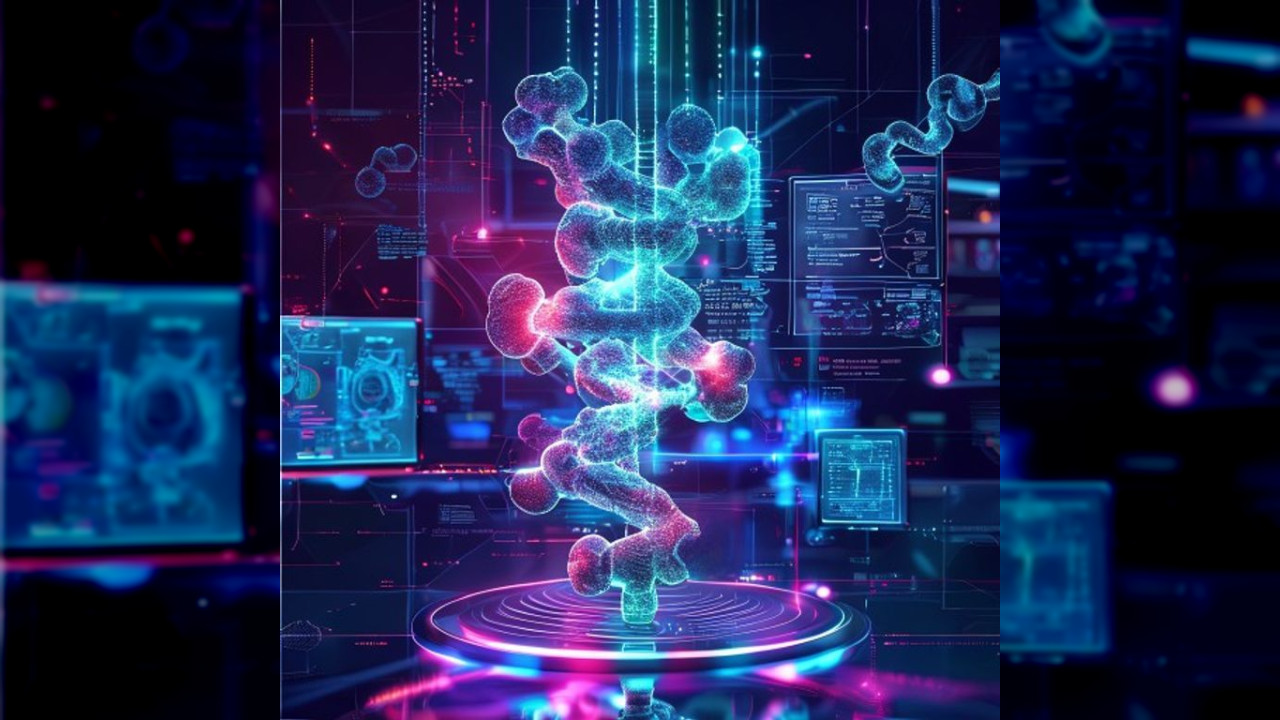
The underlying engine was trained on 2.8 billion protein sequences across the entire tree of life, from deep-soil bacteria to human cells. It works by predicting which amino acid evolution would place next, effectively learning the physical laws of how proteins fold and interact. The model doesn't just look up existing proteins; it designs entirely new "binders" from scratch to latch onto disease-causing proteins and shut them down, acting like a customized key for a biological lock.
A companion tool called ESMFold2 acts as the structural predictor, ensuring the designed molecules actually fit. The developers claim this tool actually outperforms Google DeepMind's famous AlphaFold 3 when it comes to predicting how antibodies bind to antigens. To prove it works, researchers tested the system on five oncology and immunology targets, including EGFR and PD-L1.
The lab tests confirmed the AI-designed molecules worked in real test tubes, achieving a success rate of 36% to 88% for compact mini-binders. Traditional lab methods usually take three to four years of painstaking trial and error to find a single viable candidate, whereas this computational search took just a few days.
These molecules are still early-stage candidates rather than ready-to-use medicine, meaning they still face years of safety validation and clinical trials. Along with the model, the release includes the ESM Atlas, mapping 6.8 billion proteins and 1.1 billion predicted structures.
It is incredibly rare to see a tech breakthrough of this scale bypass the corporate monetization pipeline entirely. While some companies charge exorbitant fees for API access to basic chatbots, the scientific community now has a free, world-class cancer-fighting engine, raising the pressure on traditional pharmaceutical giants to explain why their drug discovery pipelines still take decades.
Source: Chan Zuckerberg Biohub
Comments
Help shape the next version: Add context or suggest a correction. AI review can add points toward a rewrite. Reviews and updates may take time; a full meter does not guarantee a new version.